Two weeks ago, iSpot brought together brand leaders, publishers and measurement practitioners for TV Disrupt 2026, and the timing couldn’t have been better.
AI is reshaping every corner of the industry. But trust hasn’t kept pace. This year’s TV Disrupt theme—Putting the Ad Intelligence in AI—was iSpot’s answer to the moment. Not AI for the sake of it. Rather, AI built on unified and verified ad data across creatives, audiences, and outcomes.
This idea of trusted ad intelligence showed up in each TV Disrupt session through frameworks, case studies and perspectives from the brands and publishers who are leading the charge.
Here are the 5 key takeaways that came out of the room.
#1. Trusted AI Starts With Trusted Data
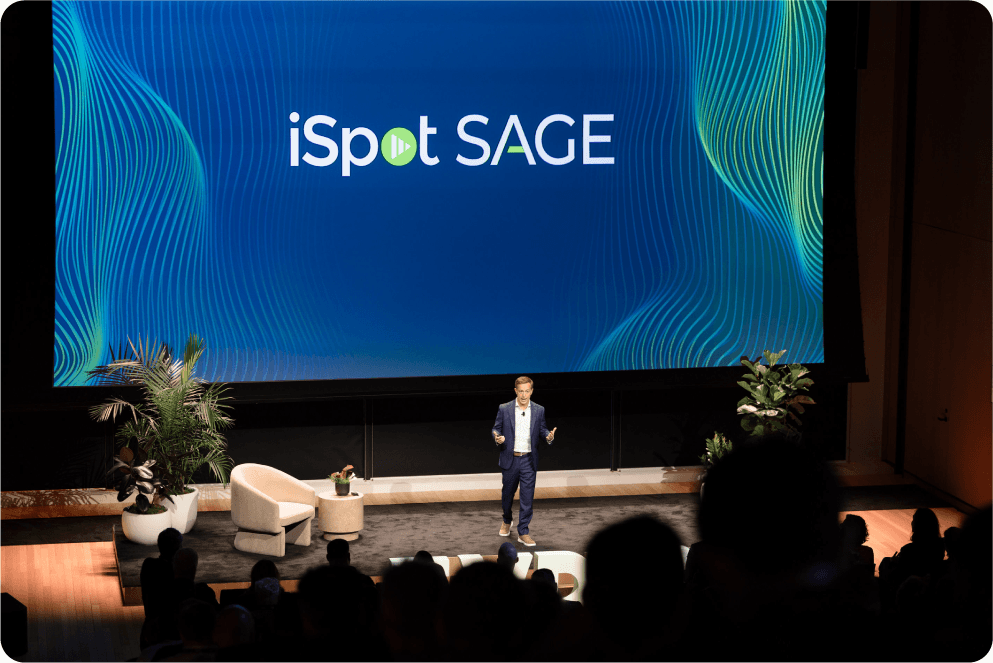
iSpot Founder & CEO Sean Muller opened with a challenge the industry has been dancing around: AI is only as trustworthy as the data it’s trained on.
A recent survey of marketing leaders made the stakes clear. The top three barriers to AI adoption were accuracy, bias and transparency. All three trace back to the same root problem: AI trained on data that hasn’t been verified, or worse, was never built for advertising in the first place.
Muller’s analogy put the problem into perspective. When asked if they’d use ChatGPT to get a steak recipe, most hands in the room went up. When asked if they’d let it pick up the spatula? None. Yet right now, the industry is asking AI to make autonomous campaign decisions before it’s even demonstrated it can be trusted.
iSpot’s answer to the “trust” problem is to put the ad intelligence in first. That’s the foundation iSpot SAGE is built on: over a decade of proprietary, verified ad data. Not the open internet or siloed inputs. Sean Muller took the audience through iSpot’s ad intelligence universe, spanning:
- 2.9 million creatives with 230 million metadata points.
- 750 million creative assessment scores across KPIs like: purchase intent, brand recall, Likeability.
- Over 80 trillion ad impressions across streaming, linear TV and digital video.
- 4.7 trillion conversion data points.
Marketing leaders from General Motors and Balance of Nature reinforced the element of trust as a critical component for using AI. Both shared their frustration with generic AI tools, from implicit biases (and a labrador-like drive to please) to inaccurate outputs that feel impossible to bring to leadership or use to make real creative and media decisions.
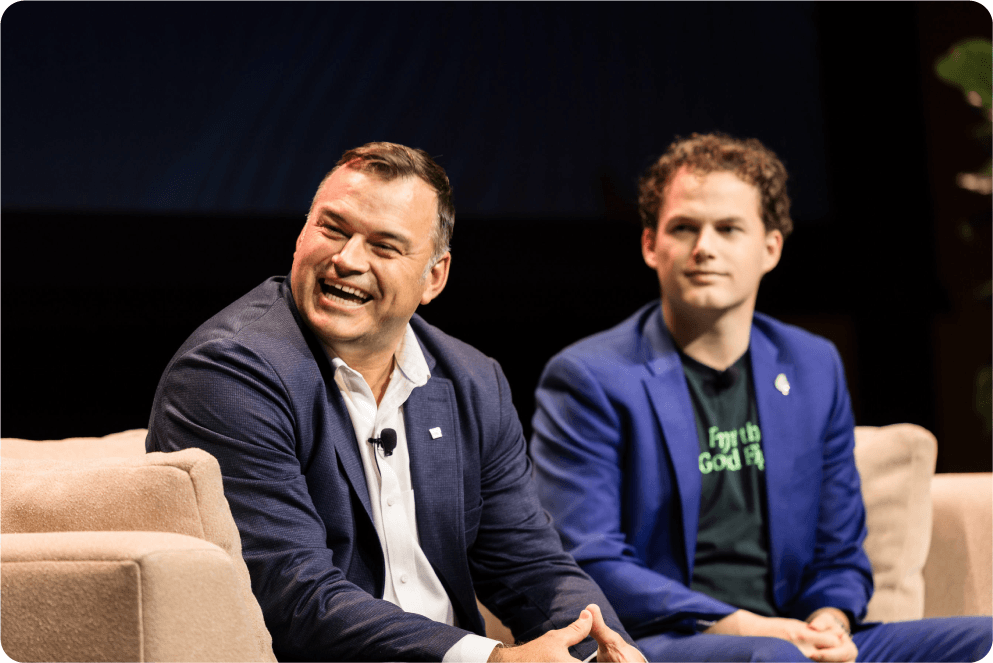
For GM’s Miles, the proof came when his team was approached about a product placement opportunity for the Chevy Bolt. Miles took it to SAGE, which surfaced past Chevy Bolt creatives with strong performance and delivered a specific, balanced recommendation: proceed, but keep GM in the driver’s seat creatively and make sure the playful context of the kids’ movie doesn’t undercut the Bolt’s reliability. They moved forward with confidence and control.
#2. Creative and Media Intelligence Are Better Together
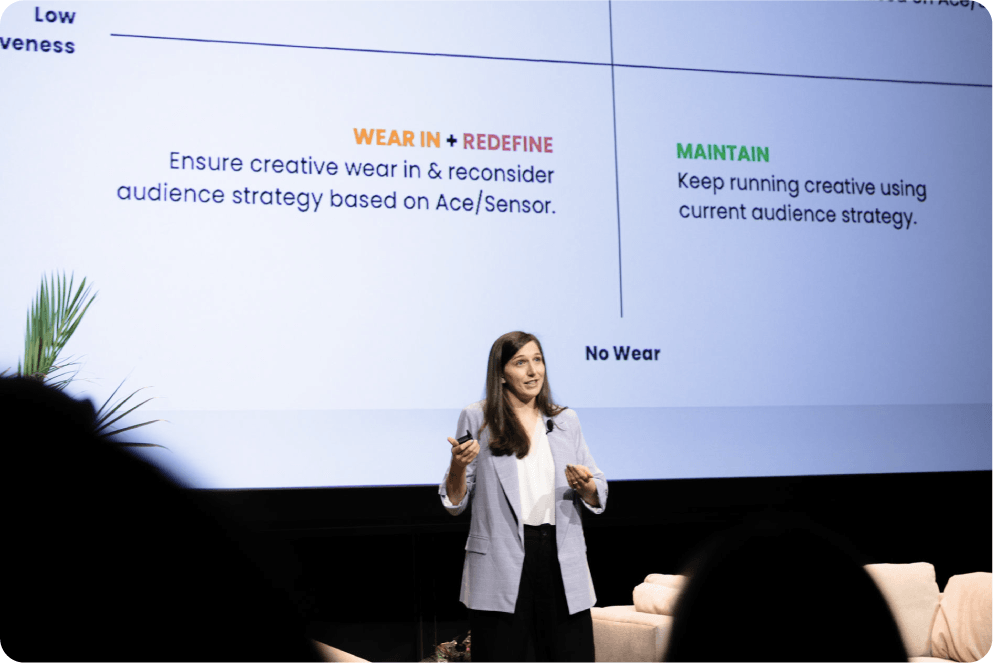
If trust is the foundation, unification is what makes ad intelligence useful. Diageo’s Megan Byrnes made that case with a simple but powerful framework that showed what happens when creative and media performance are measured together instead of in silos.
Diageo’s Creative Effectiveness Matrix plots real-time sales impact against iSpot Creative Wear scores across four quadrants, telling their team exactly when to maintain, pivot or retire a creative. That clarity has helped Diageo run effective creative longer, spend less churning out new work and redirect that saved budget toward reaching more consumers.
#3. Walled Gardens Are Opening Up
Another session that brought the unification theme home revolved around YouTube’s role in the modern TV ecosystem.
For years, YouTube sat outside the measurement conversation, impossible to compare against linear and streaming ad investments. That changed when YouTube audience data was integrated into iSpot’s Unified Measurement platform—a move that Amy Trenh, Global Product Lead of 3P Reach Measurement at Google, framed not just as a product decision but as a philosophical one.
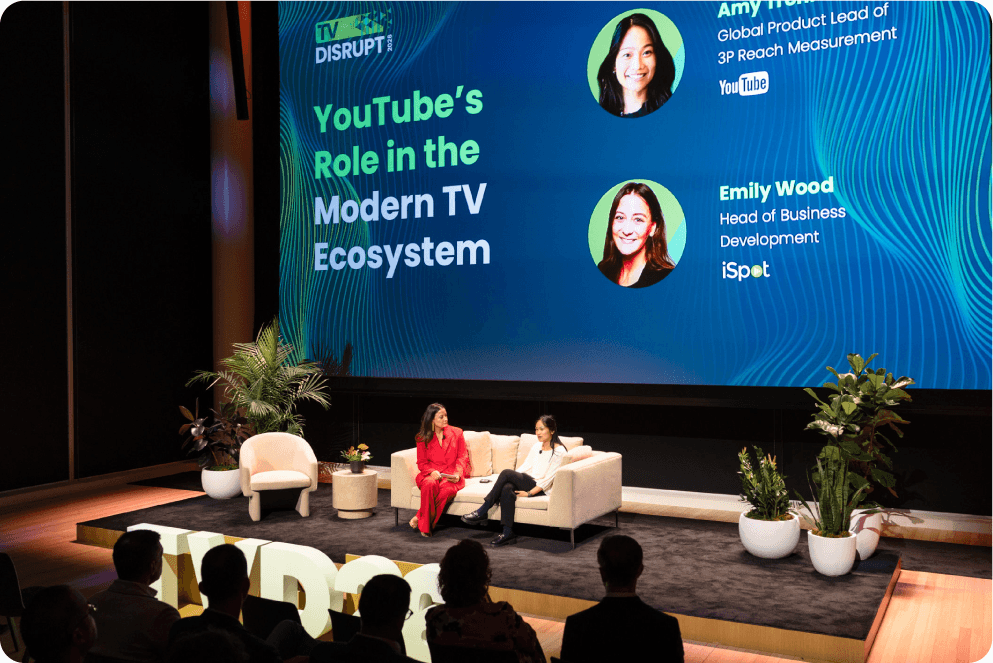
Brands have been asking for transparency and comparability across their video ad investments. Google listened. By investing the time and resources to bring YouTube into iSpot Unified Measurement, brands can now compare YouTube reach performance against linear and streaming on equal footing, with the same methodology and data sources measuring every ad investment.
#4. The Outcomes Imperative Is Operational
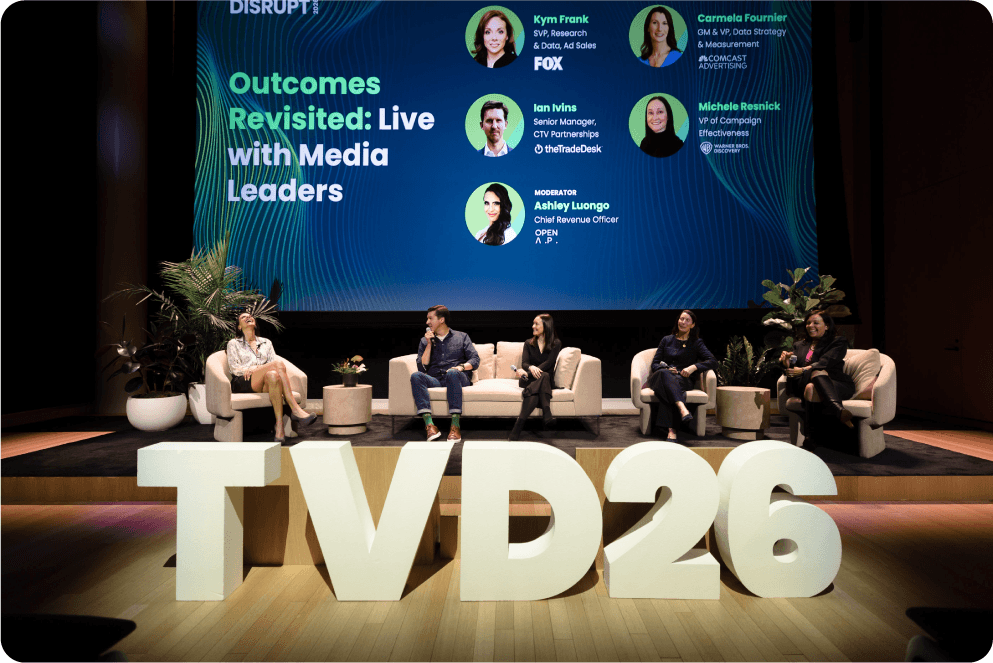
Last year at TV Disrupt, the industry was talking about why outcomes matter. This year’s media panel was about how it’s actually getting built:
- FOX has moved from dozens of outcome studies to hundreds.
- Comcast launched an outcomes-plus-speed product that combines premium inventory, deterministic data and measurement in a single package.
- Warner Bros. Discovery is leaning into data clean rooms to connect exposure to brand metrics at the campaign level.
- The Trade Desk is integrating third-party measurement signals, including iSpot, directly into buying decisions.
The direction is settled. Outcomes are becoming less of a post-campaign deliverable and more of a planning input, an optimization signal and a selling tool heading into upfronts.
The shift was equally clear on the brand side. Molson Coors’ VP of Media and Marketing Operations Brad Feinberg shared how his team built a proprietary analytics solution that feeds off of iSpot data and is designed around three components: creative and media measurement, macro marketing and business outcomes, and annual business planning. This framework helped the team at Molson Coors shift from using measurement as a retrospective, reporting tool to a decision engine that fuels the next plan.
#5. Optimizing Toward the Future
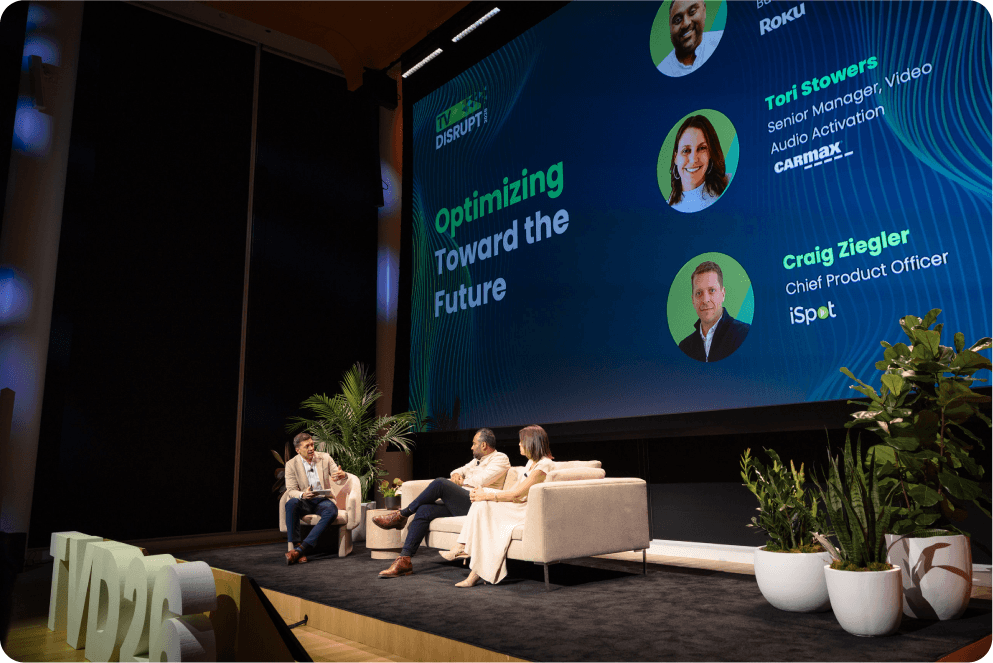
Understanding what drives outcomes is one thing. Putting that intelligence into action—while a campaign is still running—is where the real opportunity lies. Roku’s Hari Sankar and CarMax’s Tori Stowers joined iSpot CPO Craig Ziegler to dig into what that actually looks like in practice.
For CarMax, real-time optimization means tracking signals across the full customer journey and working with partners who prioritize transparency and data sharing. For Roku, it means building an open, interoperable measurement environment where buyers can pull the levers they want, on the platforms they prefer. That approach is already delivering. By using iSpot’s real-time performance signals, Roku helped a leading home security brand drive a 23% lift in leads and a 30% increase in website visits mid-flight.
The session’s takeaway was clear: the gap between measurement and action is closing—and the brands and platforms moving fastest are the ones treating optimization as a real-time discipline, not an end-of-campaign exercise.
Welcome to the Age of SAGE
The theme of TV Disrupt 2026 wasn’t just a rallying cry. It was a reflection of an industry moving toward AI that’s actually earned its place in the decision-making process, built on over a decade of verified ad intelligence that spans creatives, audiences and outcomes.
Trusted data. Unified intelligence. Outcomes that move in real time. That’s what TV Disrupt 2026 was all about. And if the energy in the room was any indication, we’re just getting started.