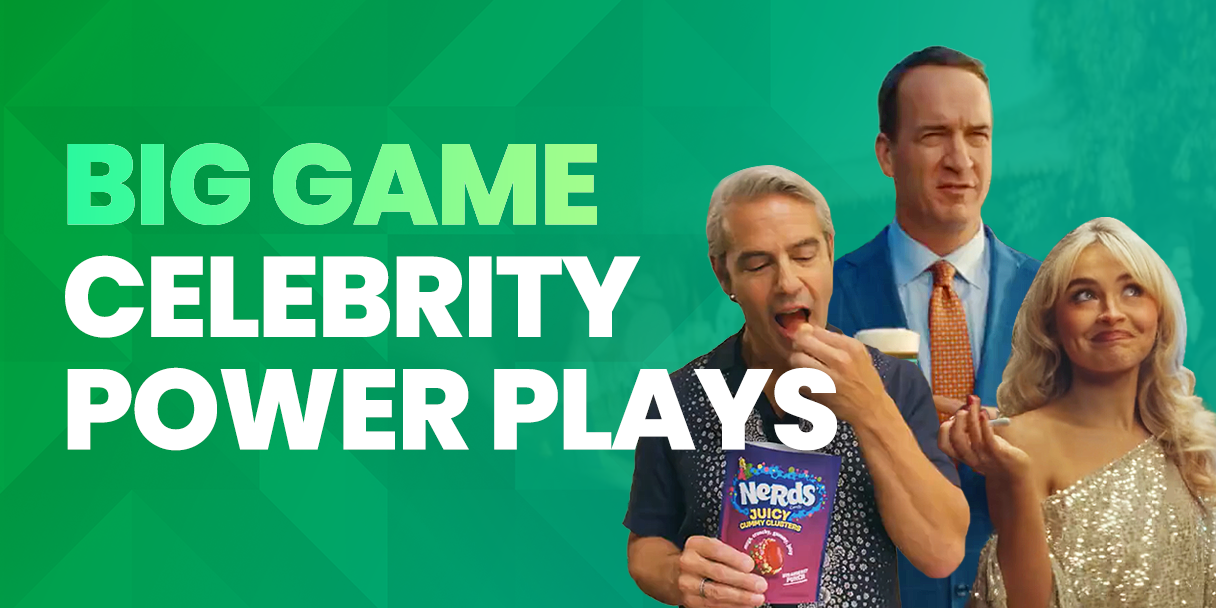
After spiking to 78% in 2020, celebrity inclusion in Big Game ads has stayed above 65% every year since, making star-driven creative the baseline, not the differentiator. For Super Bowl LX, that pattern continues with confirmed appearances from dozens of celebs including Andy Cohen, Emma Stone, Bowen Yang, Sabrina Carpenter, Paige DeSorbo, and more.
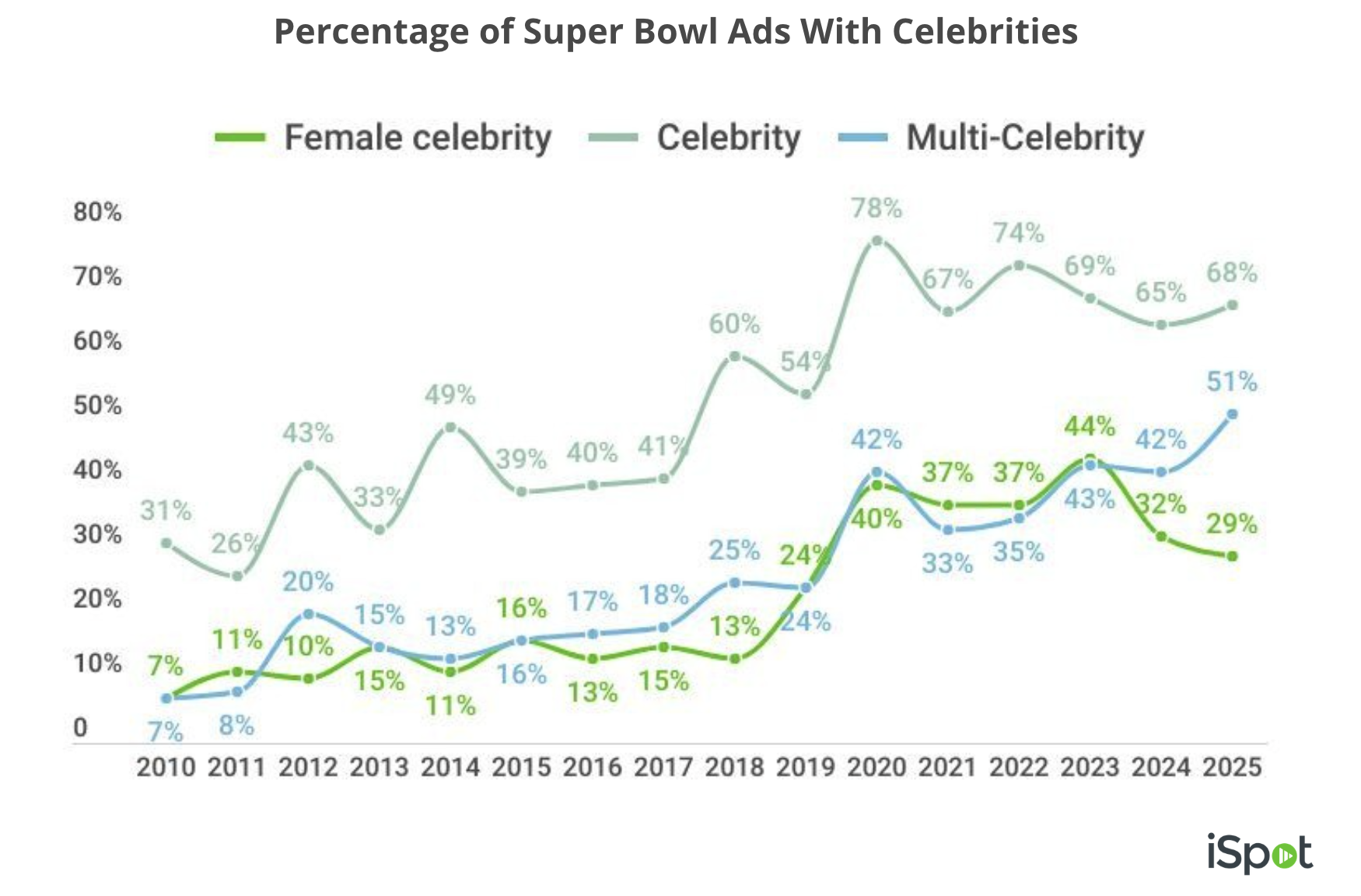
But when nearly seven in ten ads feature celebrities, the advantage is no longer in using star power—it’s in using it well. Celebrity usage isn’t just about raw fame. It’s about strategic fit.
Super Bowl LX’s lineup reflects a segmented, audience-first approach to casting. From Gen Z pop stars and internet-native icons to nostalgia-inducing actors, trusted lifestyle authorities, and elite athletes, brands are pairing personalities with strategic targeting beyond gen-pop. The goal isn’t just awareness. It’s relevance, credibility, and cultural momentum with a specific target too.
Speaking Gen Z’s Language
For brands focused on engaging Gen Z, relevance starts with cultural fluency.
Poppi pairs Charli XCX with Rachel Sennott for a pop-culture crossover rooted in online irony with “Vibes”. Pringles’ “Pringleleo” featuring Sabrina Carpenter leans into witty surrealism and romantic tropes. Ritz taps Bowen Yang for humor that feels self-aware. And T-Mobile’s campaign with Druski highlights creator-led comedy.
Age Gap-to-Norm Likeability Scores for Pringles’ “Pringleleo”
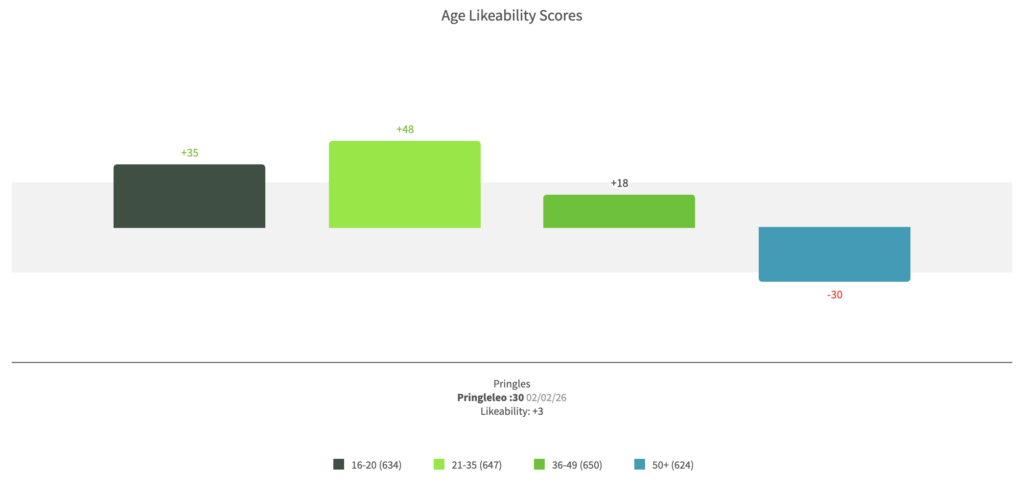
As shown in the age breakdown above, “Pringleleo” resonates most strongly with viewers ages 21–35 and 16–20, posting its highest Likeability scores among younger audiences, while performance tapers among viewers 50+. This skew shows how the spot’s humor and storytelling are calibrated for younger viewers.
These Super Bowl spots are built around the tone, humor, and references Gen Z already engages with daily. In this context, music stars and social icons function as cultural translators—helping campaigns feel familiar to young, digital-first audiences.
Nostalgia as a Scalable Emotional Lever
Nostalgia remains one of the fastest ways to build emotional connection at scale. Dunkin’s reunion of Jennifer Aniston, Matt LeBlanc, and Jason Alexander taps into decades of shared TV history. Xfinity’s Jurassic Park revival with Sam Neill, Laura Dern, and Jeff Goldblum does the same for blockbuster-era nostalgia.
These ads work because they compress years of cultural goodwill into 30 seconds. Viewers don’t need context; they already feel it.
Age Gap-to-Norm Likeability Scores for Xfinity Internet’s “Jurassic Park… Works”
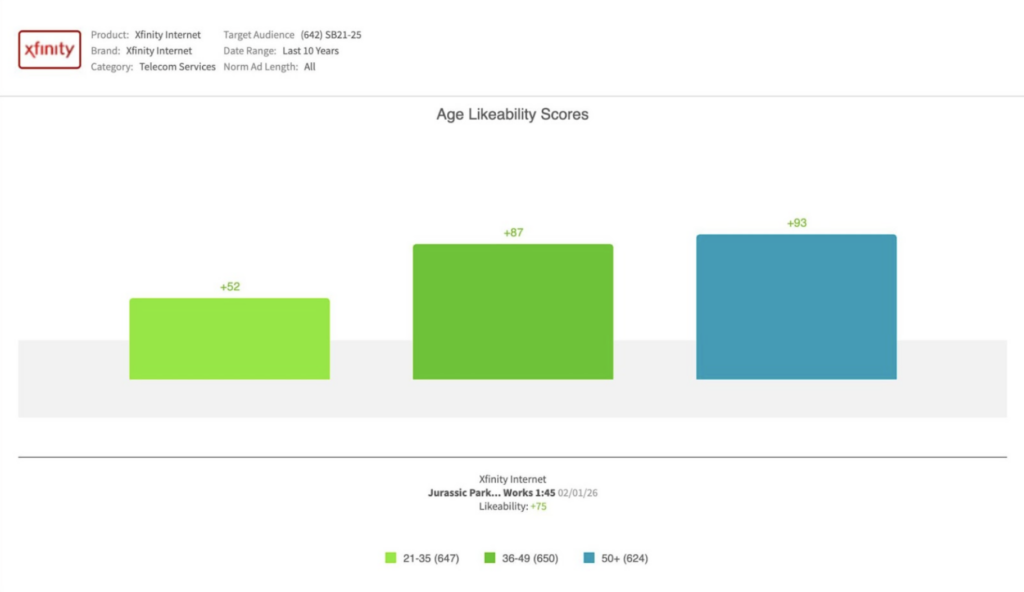
Xfinity’s creative performance data mirrors the creative intent. The Jurassic Park revival resonated with all demographics, but did particularly well with older cohorts who were moviegoers in 1993 when the first Jurassic Park came out.
Using Athletes as Proof Points
Some advertisers continue to anchor their messaging in sports culture, using performance and competition to build credibility with core NFL fans.
Bud Light’s pre-release leans on Peyton Manning as a long-standing symbol of Super Bowl authority. Novartis builds its campaign around tight ends like Rob Gronkowski and Tony Gonzalez. Meta blends Marshawn Lynch and Darren Watkins Jr. with wearable tech. And Ro reinforces health trust via Serena Williams.
In each case, athletes serve as proof points that build confidence. For brands tied to health, tech, or lifestyle optimization, that time-tested association still carries weight.
Tapping Into Female-Centric Fan Communities
Several advertisers are extending Super Bowl reach beyond traditional sports audiences by tapping into highly engaged, female-centric fan communities.
Nerds leans into Bravo fandom with Andy Cohen. Fanatics pushes into pop culture-first betting awareness with Kendall Jenner. And Kinder Bueno hits on lifestyle-driven audiences through Paige DeSorbo.
These personalities don’t just bring followers; they bring ecosystems. Built-in conversations, social engagement, and pre- and post-game sharing come with the package. That means brand relevance that lasts beyond Sunday night.
Gender/Age Likeability Scores for Kinder Bueno’s “Yes Bueno”
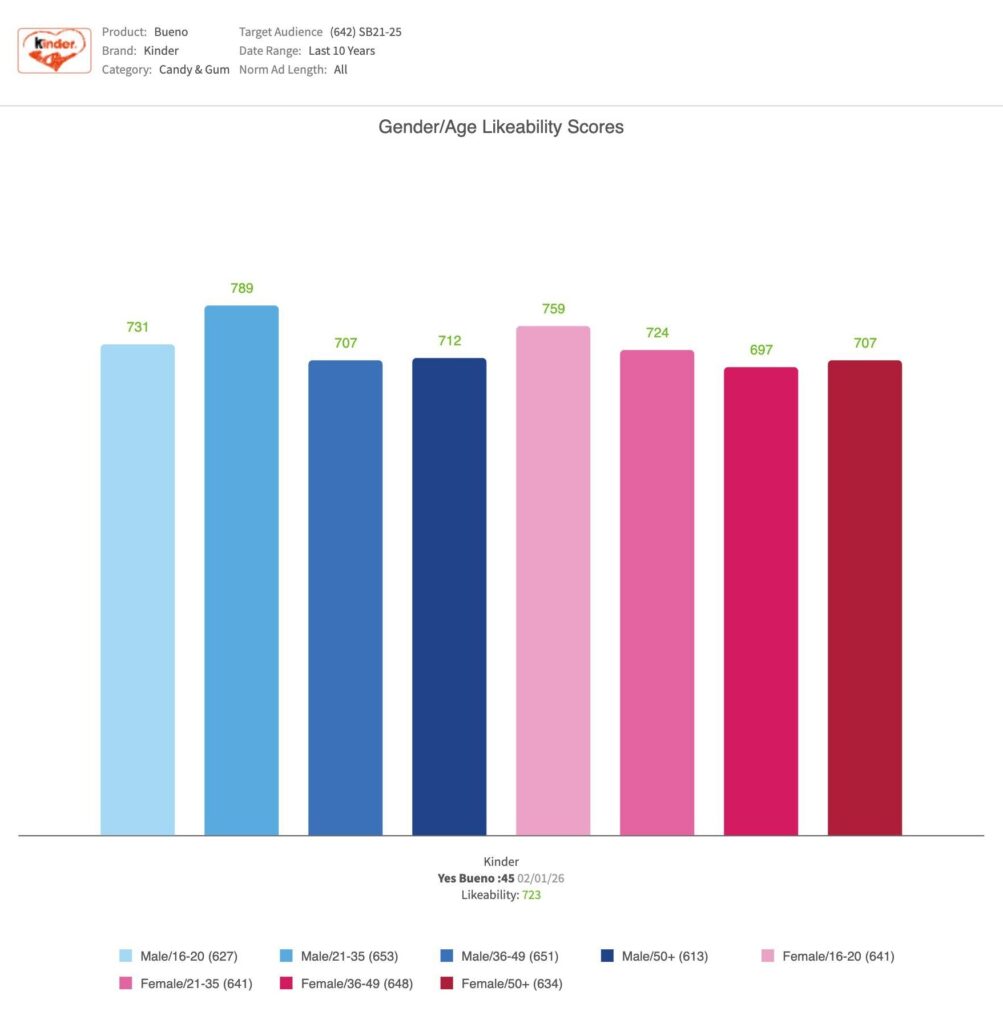
Kinder Bueno’s broad performance in Likeability across age and gender reflects a well-executed, layered creative approach. Paige DeSorbo brings relevance with female audiences, while the action-packed space storyline and William Fichtner’s presence help extend appeal to male viewers. The result is a spot that’s performing well across demographics.
Your Front-Row Seat to Super Bowl LX Ad Performance
Want more? Stay ahead of Super Bowl LX performance with iSpot’s VIP Ad Center. Track every teaser, pre-release, and game-day spot in one centralized dashboard—bringing creative and audience metrics together, so you can benchmark performance and see what’s breaking through.
Then join our post-game webinar on Tuesday, February 10 at 1 PM ET with GM for an exclusive look at iSpot’s next-gen AI platform plus a breakdown of Super Bowl LX’s top ads and winning creative trends.