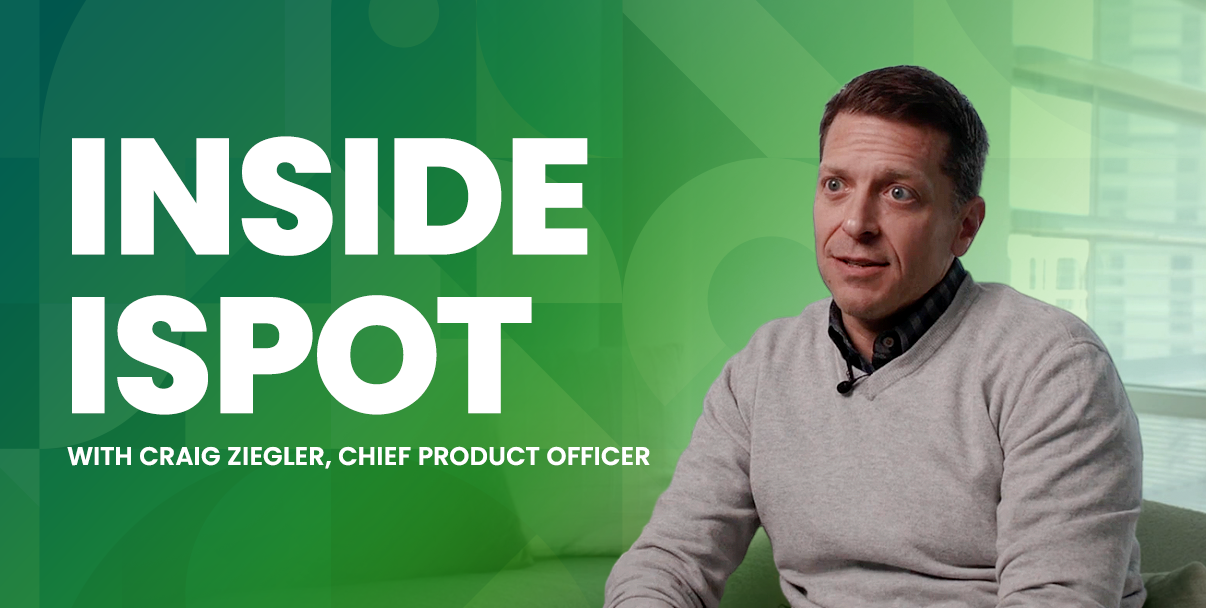
As video ads continue to fragment across linear, CTV, and social platforms, marketers are demanding more than reports—they want real-time intelligence they can act on. Or as Craig Ziegler puts it, a shift from measurement as “a system of record to a system of action.”
With more than two decades in technology and ad tech, Craig has helped build many of the systems that power modern digital advertising. Now at iSpot, he’s focused on the next phase: turning unified video ad measurement into a platform that not only explains performance, but actively improves it.
In this conversation, Craig explains how iSpot is evolving into an intelligence engine for cross-channel planning, measurement and optimization. It’s all based on the massive foundation of proprietary data iSpot has built up over the last 16 years. He goes on to share how the AI-powered iSpot SAGE platform and new optimization partnerships are deepening unification across creative, audience and outcomes. The goal: video ad measurement that doesn’t just explain what happened, but tells you what to do next.
Watch the interview with Craig Ziegler, iSpot Chief Product Officer. Full transcript below.
Why did you join iSpot?
Craig Ziegler: What drove me to iSpot is really the singular focus on video, number one. And then number two, the strong data assets that the company has built up over the years. And, if there’s a third, the strong roster of customers, brands, publishers, platforms. And you put that together, I think there’s a big opportunity for our customers, then also for iSpot.
What are iSpot’s plans around optimization?
Craig Ziegler: The partnership we’re building with Roku is a great example of where we’re going with optimization. In that case, we’re collecting on behalf of our customers, our brand customers. Obviously, all of their exposure data across digital linear. And we’re also collecting, you know, first-party, third-party outcomes on behalf.
And the partnership with Roku really represents where we’re headed around optimization. We’ve got deep data around exposures and outcomes. And we’re now using that to feed back into Roku so they can build it into their optimization capabilities ultimately to drive better results for marketers. And we’re really excited to be working with them on it.
The SimpliSafe beta test really gives us a lot. It really gives us a good conviction for where we can take this thing. And it’s early days.
How is iSpot using AI to differentiate itself?
Craig Ziegler: AI is obviously a big topic for so many companies in adtech and advertising. What makes iSpot unique is our data assets. AI starts with data. We have unique and proprietary data both around video exposures, the ads that consumers are watching and integrating and interacting with, and then also around creative from both what’s resonating with consumers, either what’s live or creative that we’ve helped marketers pretest and what works and what doesn’t.
So that gives us 16-plus years of data that we can now use to feed into our authentic AI platform and help bring better results for marketers and for brands and for publishers.
Tell us about iSpot SAGE.
Craig Ziegler: iSpot SAGE really helps us move from a measurement company to a measurement planning and optimization company. It takes us an iSpot from being a system of record to a system of action, and that is based on the foundation of data that we have as a company that we’ve built over the years. For us it starts with creative. So we’re taking the millions of ads that we’ve seen over the past 16 years using computer vision and other AI techniques to classify frame-by-frame what’s happening within those ads. We’re also then taking that data and understanding what are consumers telling us that resonates with their ads?
What is it about those ads that drive purchase intent, that drive likability, the sentiment of the verbatim that they’re giving us is part of that interaction, and we’re putting that together and really helping us do a couple of things. One, it helps marketers understand what’s working, what’s resonating within their creative.
Because this is syndicated data. It helps them understand what my competitors are doing that I’m not. What opportunities should I be taking advantage of? And the third thing, and this is something that we are now doing with AI that we couldn’t do before, is now you can go in and start creating new concepts and with our pretest capabilities, test those concepts in real time so that when you go to market, you know that those ads are going to work and are going to perform awesome.
What is the agent platform?
Craig Ziegler: The agentic platform for iSpot, it’s a really interesting opportunity for our customers. And it comes back to the data that we sit on. We understand all of the exposures across the primary sources of video. So connected television linear more and more social video.
Now that we understand which audiences and households are being reached uniquely, which ones are driving incremental conversions? That data helps inform our agents to then go activate against what’s working. And that’s really a big opportunity for what we see around the agent architecture we’re building.
What else are you excited about this year?
Craig Ziegler: One of the things that we’re really excited about around measurement is unified measurement, particularly a unified audience and unified outcomes measurement. And here at CES, you know, outcomes are a huge topic. We’re uniquely positioned in terms of measuring obviously CTV and linear, so a big focus of ours is to expand coverage into the large consumer platforms around short form video, right?
All of that growth from a consumer perspective leads to greater fragmentation for marketers. iSpot and our unified measurement capability brings all of that together and helps marketers understand not just CTV versus linear channel versus channel, but actually publisher versus publisher. And where are you saying incremental performance, incremental reach?
And that’s the power of unified measurement. The other place where it stands out is today. You may get some of that a week later. Two weeks later. Very rigid. We are building a platform that provides real time updates, very, very flexible in terms of what you can understand of what’s performing. And that’s really the flexibility that marketers need to optimize within digital.