PetSmart is shifting its marketing strategy to directly challenge online-only competitors, to capitalize on research that saw 76% of pet parents admitting the use of multiple retailers. Created by Porter Novelli with creative from Deutsch, the new “Cheating?!” campaign argues that the pure e-commerce model creates dissonance for consumers seeking flexibility and in-person interaction. By highlighting a “full-package” value proposition, including 1,600 physical stores, grooming services, same-day delivery, and in-store adoption, PetSmart is positioning itself as a comprehensive alternative to digital-only rivals.
The initiative included a “National Breakup Day” event on February 21, allowing customers to trade in competitors’ delivery boxes for prizes, alongside a sweepstake for a year of free Autoship.
Here’s what iSpot’s Creative Assessment platform revealed on pet owners’ response to the campaign.
The Details:
Among Pet Owners:
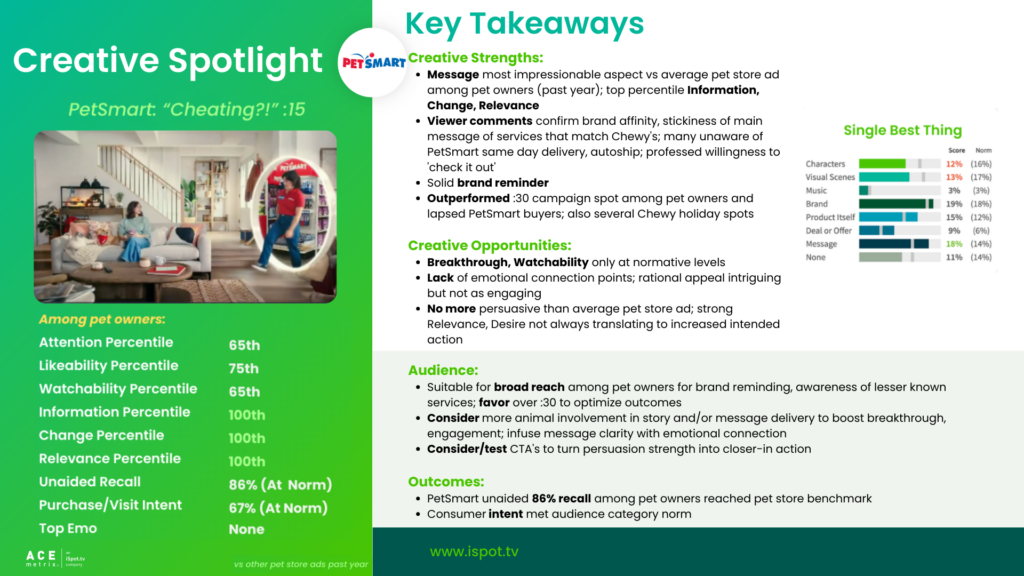
- The “Cheating?!” :15 earned an Ace Score of 742 vs. the 693 pet owner norm (+49 points over pet store benchmarks, top percentile), reflecting a top-tier creative that resonated significantly with the target core audience:
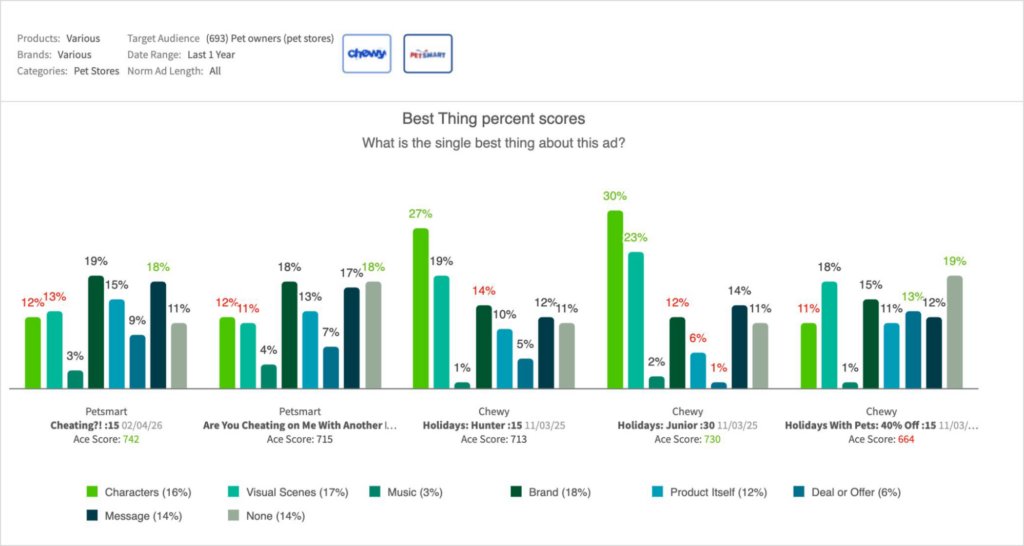
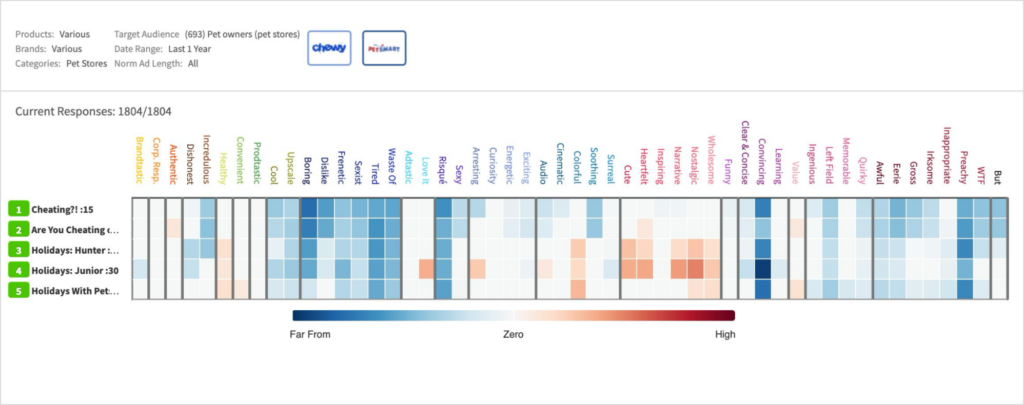
- Although the new :15 lacked any visceral or heart-driven connection, it compensated with rational strengths; Information, Change, Desire, and Relevance all registered as top percentile strengths. This resonance was driven by the message, cited as the Single Best Thing about the ad at a disproportionately high rate, confirming the “cheating” message frame was not only heard but found highly relatable. The brand and product itself were also mentioned frequently, indicating strong affinity with 86% recalling PetSmart on an unaided basis after a single view.
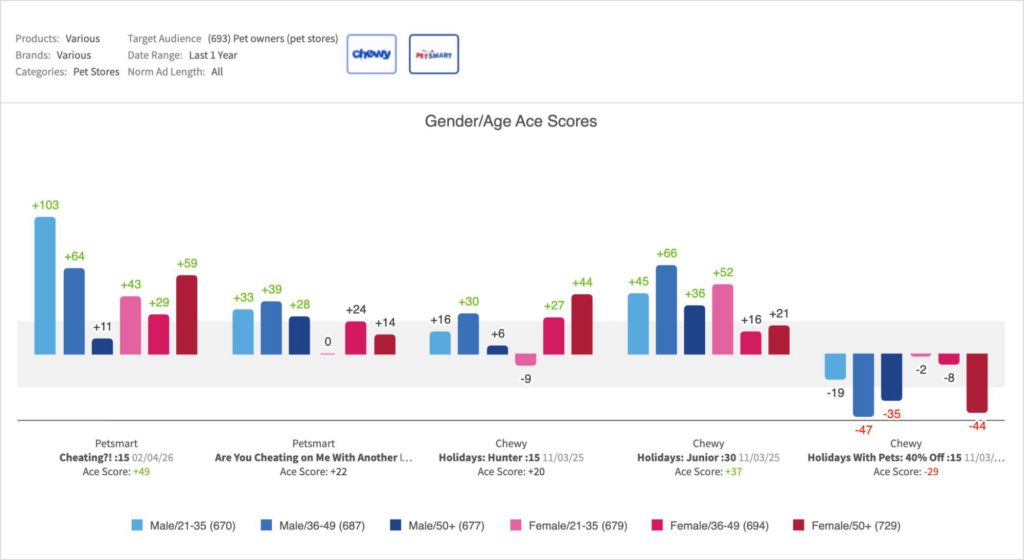
- The ad achieved at- to above-norm response across pet owners regardless of age/gender, but notched normative breakthrough with this audience. Given a lack of emotionality, this is likely reflecting the fact that typical pet ads feature animal visuals more prominently and/or tug on the heartstrings a bit more to engage.
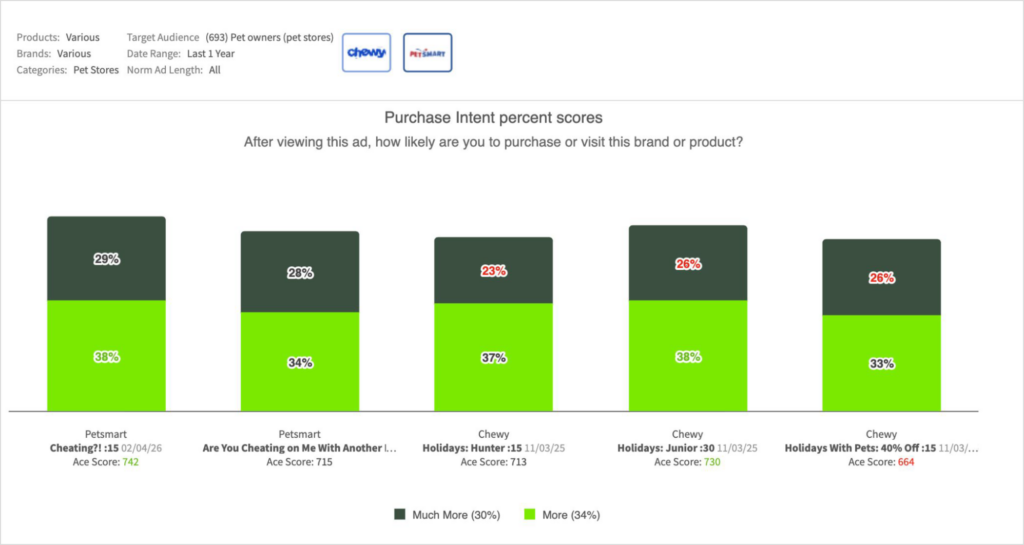
- Although the message was received, it did not spur higher intent to act, with Top 2 Box purchase/visit intent (67%) landing around the audience one-year norm of 64%.
- These results point to opportunity for future iterations – focusing on improving Attention and Likeability — making the opening hook more arresting and the overall experience more enjoyable — so that the strong rational engine underneath has an even larger audience to work on. Consideration could also be given to effects to drive more immediate action on the part of pet owners.
- Although the new :15 lacked any visceral or heart-driven connection, it compensated with rational strengths; Information, Change, Desire, and Relevance all registered as top percentile strengths. This resonance was driven by the message, cited as the Single Best Thing about the ad at a disproportionately high rate, confirming the “cheating” message frame was not only heard but found highly relatable. The brand and product itself were also mentioned frequently, indicating strong affinity with 86% recalling PetSmart on an unaided basis after a single view.
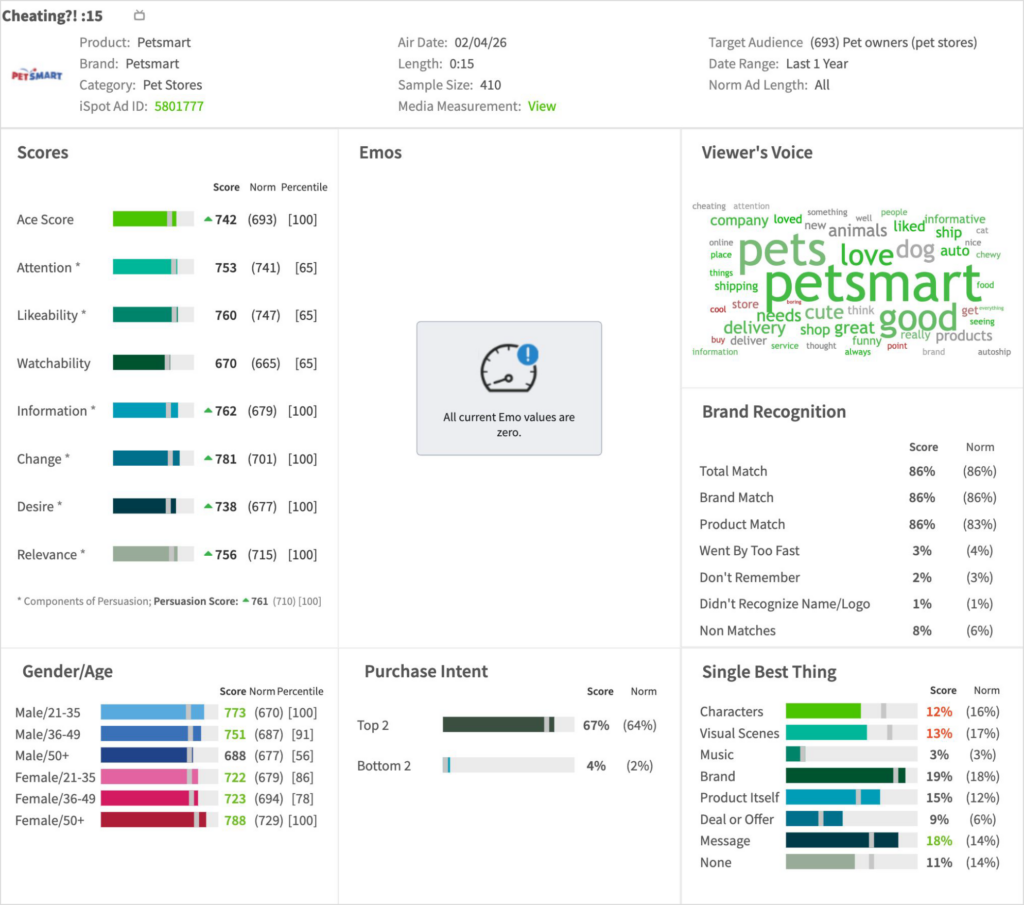
- The :15 outperformed the :30 in overall response as well as multiple Chewy holiday ads, and sparked stronger consideration among pet owners:
- This points to the opportunity to favor the :15 in forward media rotations to optimize the budget and/or maximize reach.
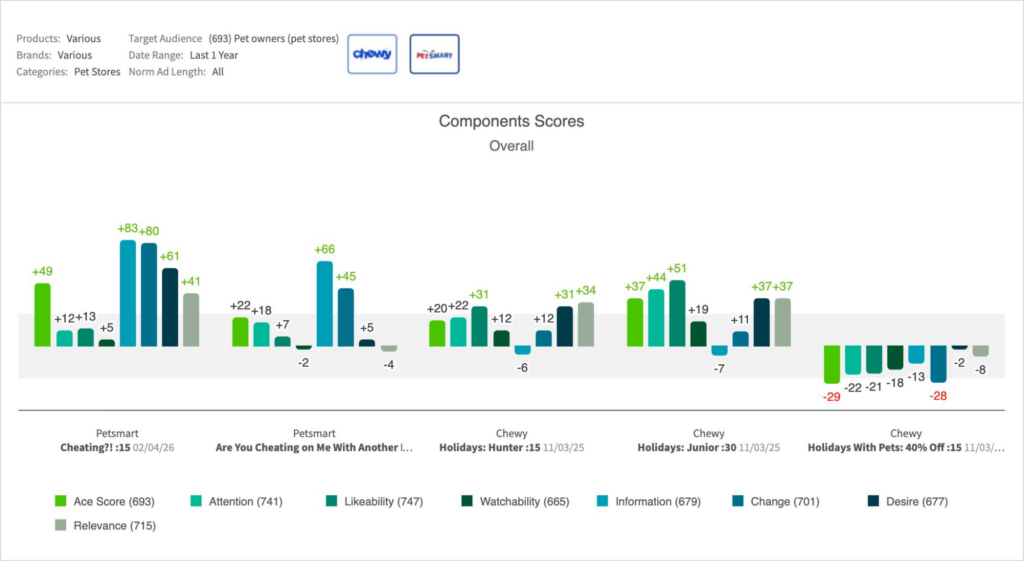
- Viewer sentiment among pet owners seeing the :15 ” Cheating?!” indicates that a substantial number of pet owners were not aware that PetSmart offers delivery/autoship services, underlining the importance of getting this new Information out with a broad reach media plan.
- The competitive framing was immediately understood and resonated as both clever and informative. With little negative response to the positioning (most found the humor effective and memorable), PetSmart has the opportunity to claw back some online purchases currently lost due to lack of awareness of this offering. Clear statements of intent to change behavior based on this ad were seen.
- Reflecting the lack of emotional connection, pet owners at times felt the pets appeared too briefly, with some explicitly requesting more animal content. A few also were concerned with the ‘cheating’ references.
- Many pet owners expressed existing loyalty and positive brand associations, confirming that the brand is building from a position of strength.
- This points to the opportunity to favor the :15 in forward media rotations to optimize the budget and/or maximize reach.
Sample comments on “Cheating?!” :15 among pet owners
“It was clear they were highlighting the fact that they can compete with other big brands, specifically Chewy, and that they can do it as well, or even better, and they can get the products you order to your door even faster than Chewy can. The ad also causes one to feel as if PetSmart is embracing ways to innovate and grow to compete in this market.”
Male 50+
“I absolutely adore PetSmart. They are super useful and make my life a lot easier, especially for my dog!”
Male 21-35
“I loved seeing the dog and cat together and the portal opening was cool. I didn’t like the phrase ‘cheating on me’ though.”
Male 36-49
“The concept of cheating on a pet store is amusing, but I guess I had no idea PetSmart shipped. So now I do.”
Male 50+
“PetSmart is trying to stay relevant and better assist customers.”
Female 21-35
“I think autoship is a good thing to compete with things like Chewy. The characters in the ad made it feel new.”
Male 21-35
“I had no clue that they did same day shipping! I might have to check that out.”
Female 36-49
“I love this ad. The dogs are so cute in it. I did not know pet smart had shipping.”
Female 50+
“I like how it showed it has similar features to its competitor.”
Male 21-35
“I enjoyed it. I don’t usually think of PetSmart for autoship.”
Female 50+
“I thought it was funny when they were asked if they were cheating.”
Male 36-49
“I love it! I didn’t realize that I could order online!”
Female 36-49
“Cute. Funny phrasing, which is nice. I definitely recognized those Chewy boxes. I thought that was a clever and subtle reference to ‘other pet stores’.”
Female 21-35
“It was cute, but it needs to feature the animals more prominently.”
Female 50+
“I always shop in-store, but I might start checking out online for free delivery.”
Male 36-49
- A comparison of the most impressionable creative aspects reveals Chewy’s “Hunter” and “Junior” ads were driven by the characters and visuals, reflecting a more aesthetic and emotional appeal. In contrast, “Cheating?!” is winning the rational persuasion battle. PetSmart’s strategic gap to close would be to inject more visual and character-based appeal without sacrificing message clarity:
- In the :30 forms where storytelling becomes more of a strength, Chewy’s “Hunter” outpaced PetSmart’s spot across most age/gender segments.
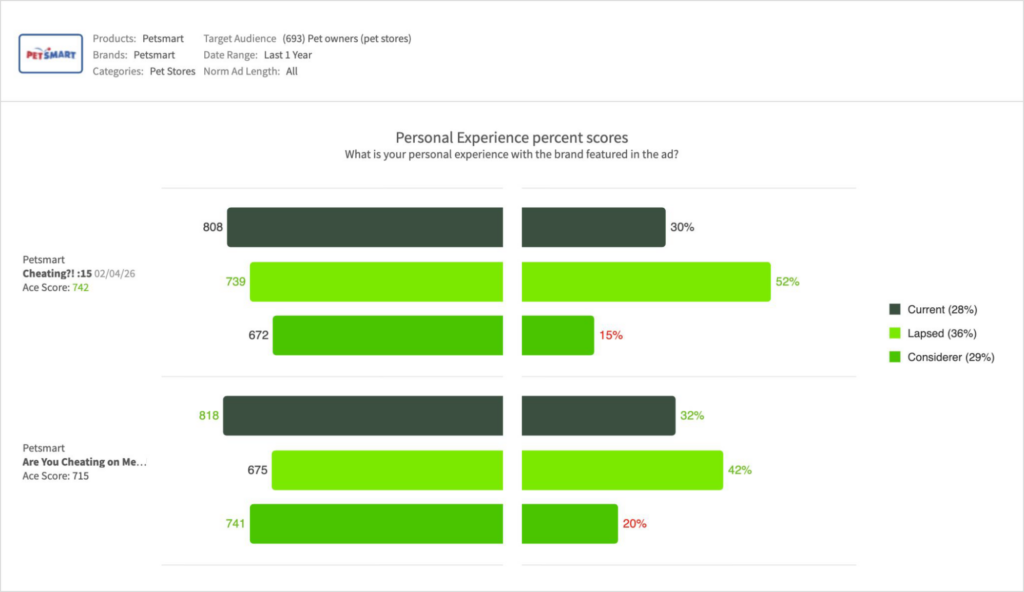
- The shorter form “Cheating?!” proved to be more resonant among lapsed PetSmart buyers, the largest proportion of pet owners:
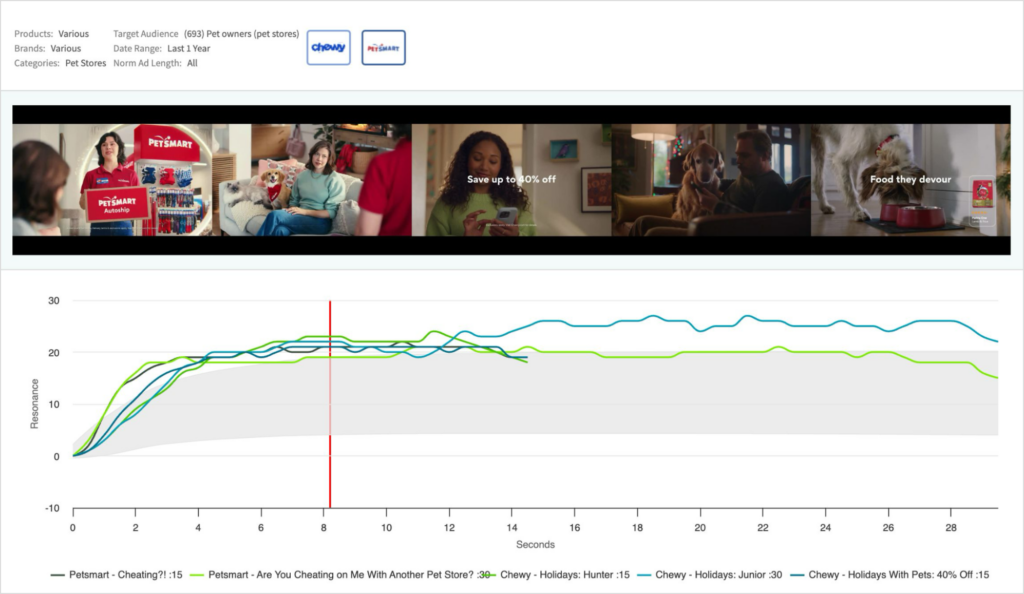
- Second-by-second trace results indicate a flattening of engagement among pet owners viewing the :30 “Are You Cheating on Me With Another Pet Store?” as the narrative continued and focused on humans over the animals:
Ineffective creative, even if delivered to the right audience, results in missed opportunity and performance shortfalls. Great creative delivered poorly also results in failed campaigns.
Schedule a demo to find out how your brand can partner with iSpot to quickly solve both challenges simultaneously, delivering high-performing creative while boosting the effectiveness of planning and in-market execution to achieve—and outperform—campaign objectives.
Creative Agency: Deutsch