Haleon’s Robitussin is stepping into the winter cold and flu season with a fresh approach designed to “take care of” nagging, unacceptable coughs. Marking the brand’s first work from bespoke agency Publicis LeONE since Haleon consolidated its global creative business last year, the “Take Care of Your Cough” effort represents the largest integrated campaign in Robitussin’s 77-year history.
The campaign introduces “Robby Tussin,” a deadpan “cough hitman” complete with a trench coat, a hidden interior pocket, and classic movie tropes. Across a series of :15 spots set in everyday locations like a public restroom, a kitchen, and a bedroom, the character appears when a cough crosses the line—whipping out a bottle of Robitussin to deliver fast, powerful relief.
Here’s what iSpot’s Creative Assessment platform revealed on actual viewer response to the campaign.
The Details:
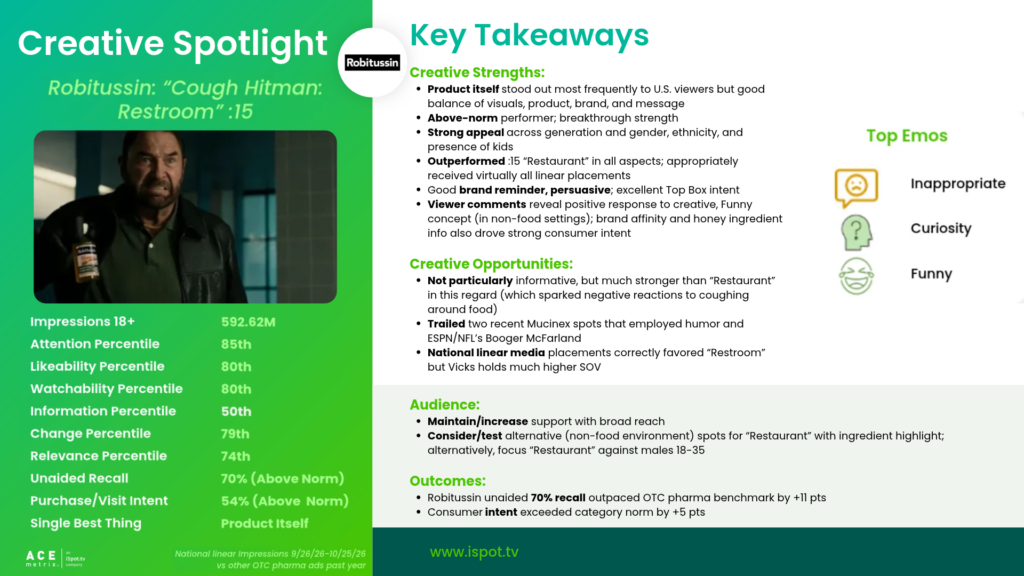
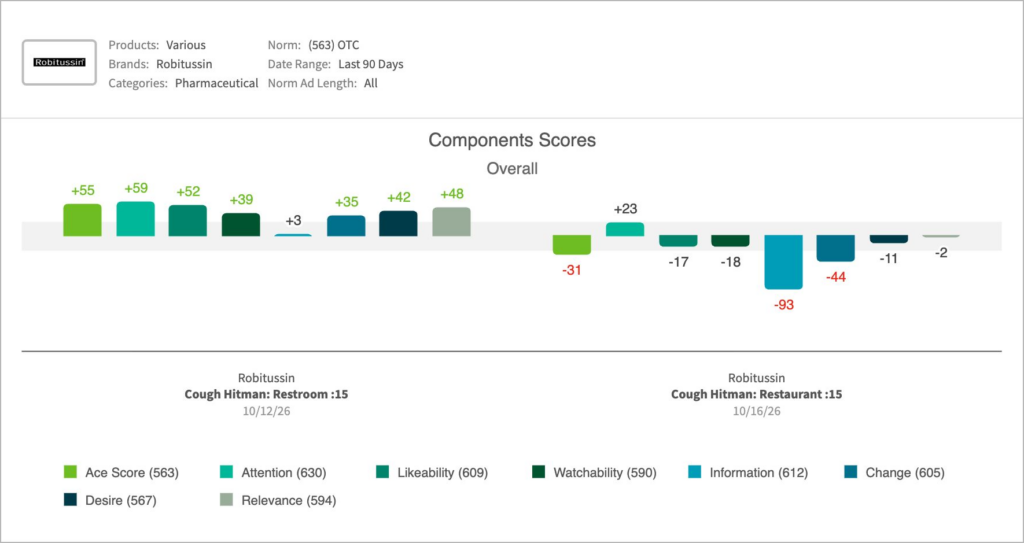
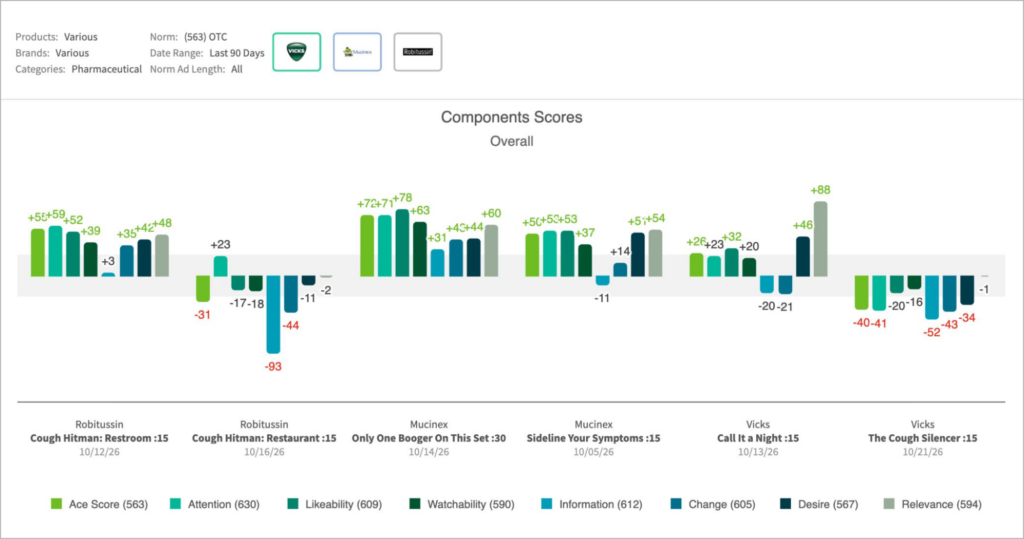
- U.S. gen pop audiences responded very positively to the :15 “Restroom” spot in the new Robby Tussin campaign, with overall response (as measured by Ace Score) coming in +55 pts over the average OTC pharma ad (past year benchmarks):
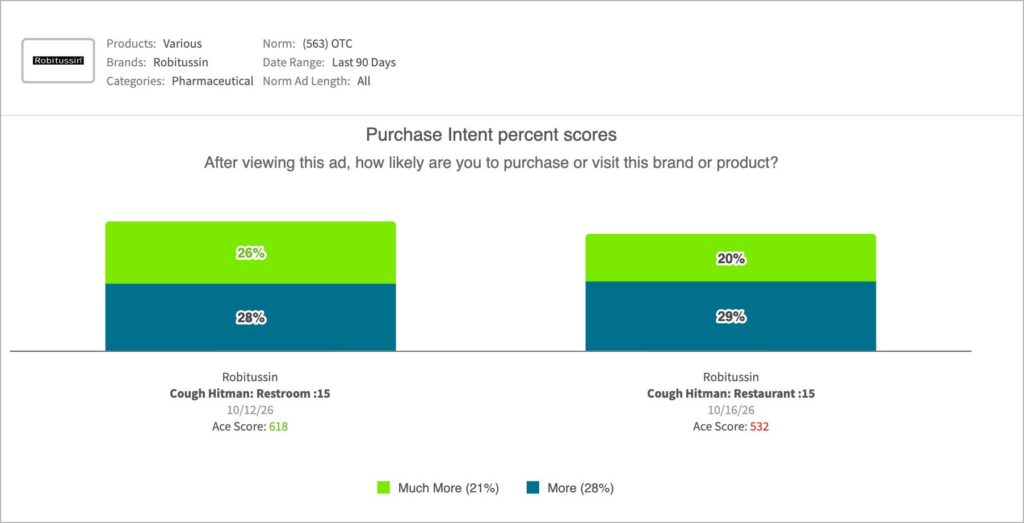
- “Restroom” won on both creative and commercial measures vs the :15 “Kitchen”. With six of seven creative component scores tracking above benchmark levels, “Restroom” also persuaded more successfully (with a 54% Top 2 Box intent recorded) than both “Kitchen” (49% ) and the average category spot (49%). Moreover, the lift came from intensity: 26% professed being much more likely to purchase or visit the brand, accounting for the full +5 pt advantage.
- The strongest creative aspects of “Restroom” were its breakthrough ability (Attention and Likeability) and its Watchability with a Change in direction, Relevance and Desire also above-norm. While neither were perceived as particularly informative, “Kitchen” trailed significantly in this regard although the hitman concept captured some Attention.
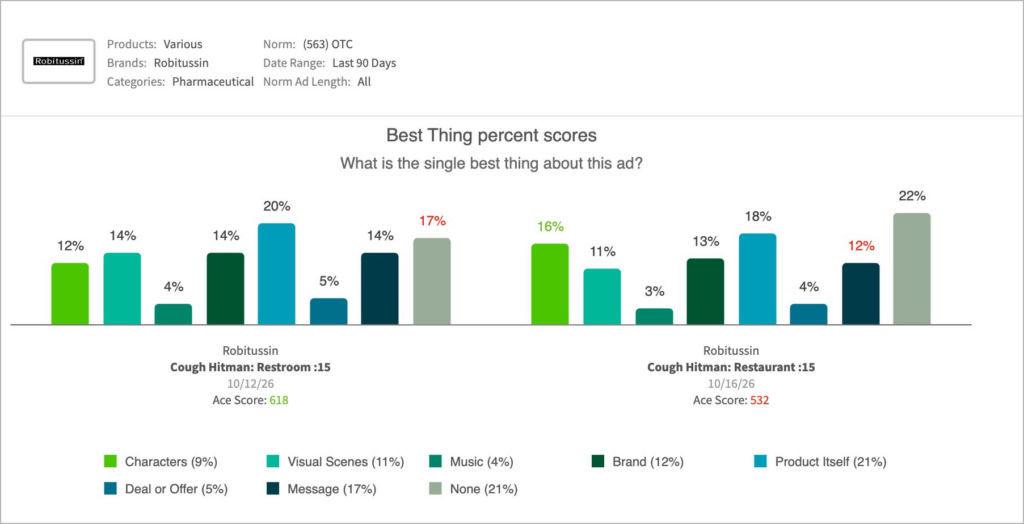
- Viewer ratings of the Single Best Thing about the ads show a balanced distribution across the product, brand, message, and visuals among viewers of “Restroom” while an above-average 22% of “Restaurant” viewers could not identify a standout element.
- “Restroom” won on both creative and commercial measures vs the :15 “Kitchen”. With six of seven creative component scores tracking above benchmark levels, “Restroom” also persuaded more successfully (with a 54% Top 2 Box intent recorded) than both “Kitchen” (49% ) and the average category spot (49%). Moreover, the lift came from intensity: 26% professed being much more likely to purchase or visit the brand, accounting for the full +5 pt advantage.
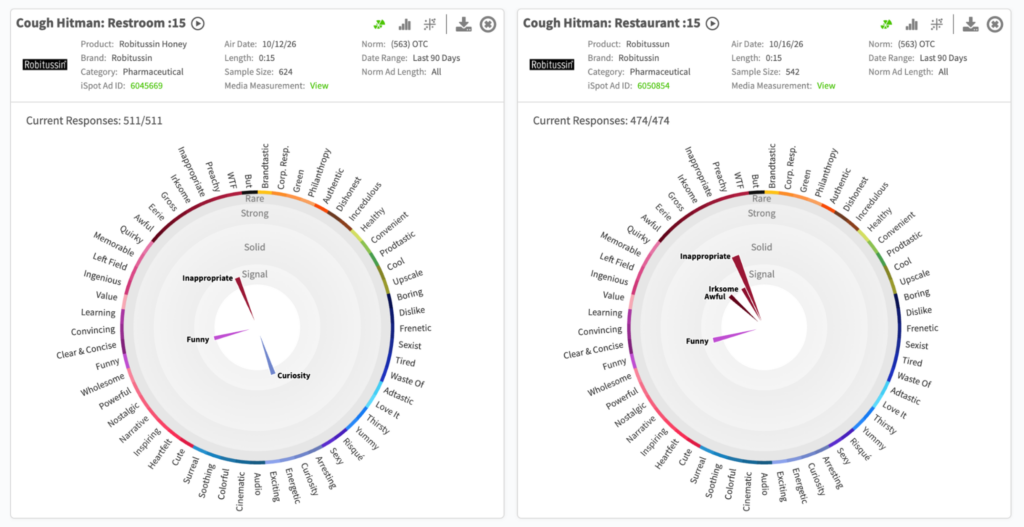
- Emotional profiling of viewer comments on each ad reveal stronger negative-leaning reactions to “Restaurant” – particularly feelings that the ad was Inappropriate in nature:
- Irksome and Awful response was also measured in comments on this ad, both of which were absent among viewers of “Restroom” — the latter ad rather sparked Curiosity.
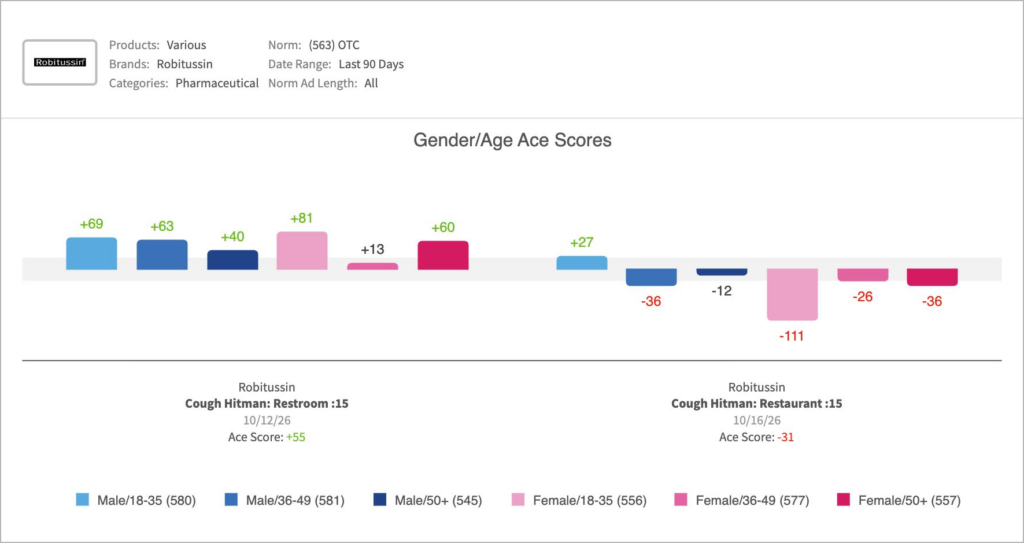
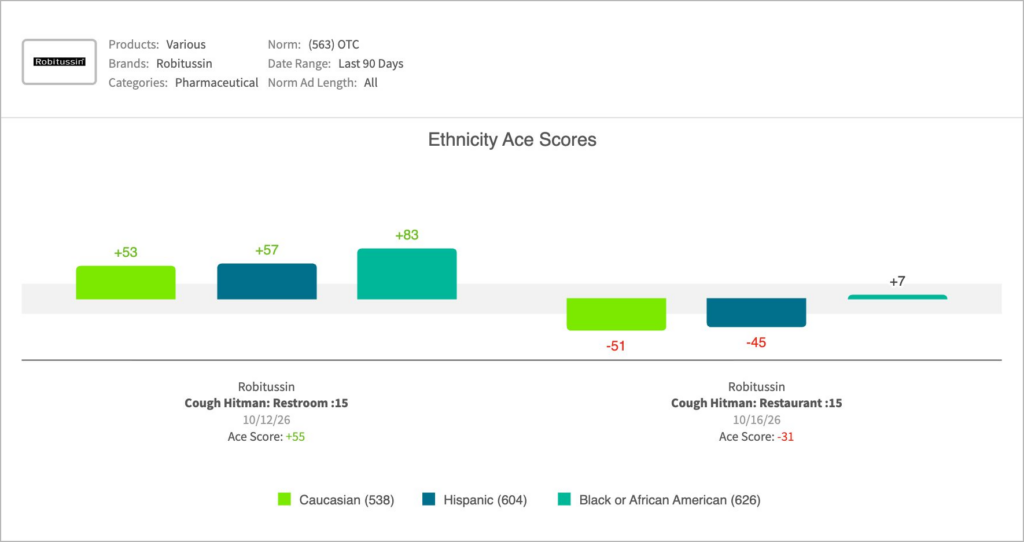
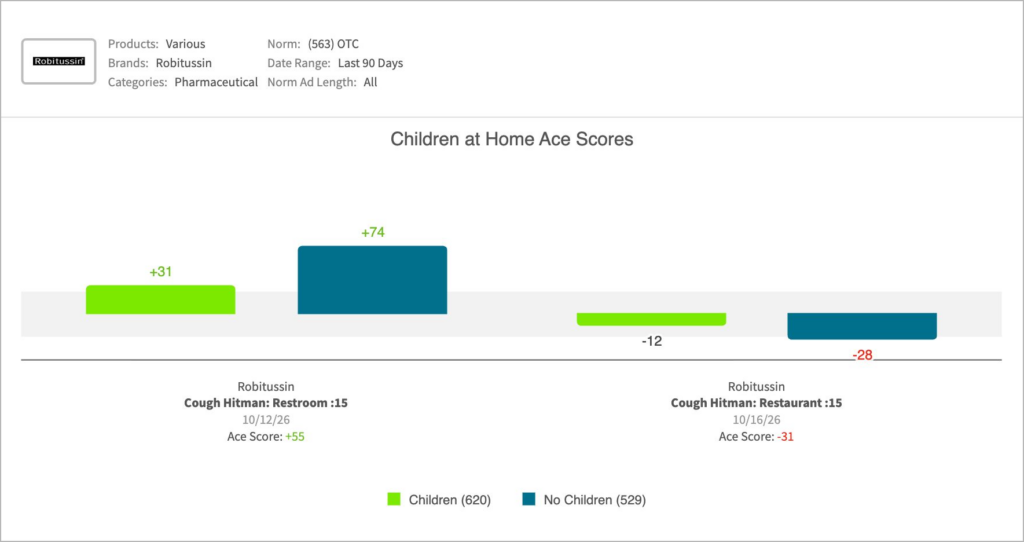
- The advantage held by “Restroom” was consistent across age/gender, ethnicity, and presence of children suggesting that media budgets strongly favor “Restroom” to optimize results. Although younger males 18-35 showed positive response to “Restaurant,” this result still trailed that for “Restroom” within the same audience.
- Young women showed the biggest gap of any demographic, with females 18-35 response +81 pts over benchmark for “Restroom” vs -111 pts for “Restaurant,” a 192-point swing.
- “Restroom” therefore is applicable to run broadly with confidence, with extra weight in young-adult, multicultural and no-kids-household inventory. If “Restaurant” stays on air before it is reworked, it would best be limited to male 18-35 placements.
- Irksome and Awful response was also measured in comments on this ad, both of which were absent among viewers of “Restroom” — the latter ad rather sparked Curiosity.
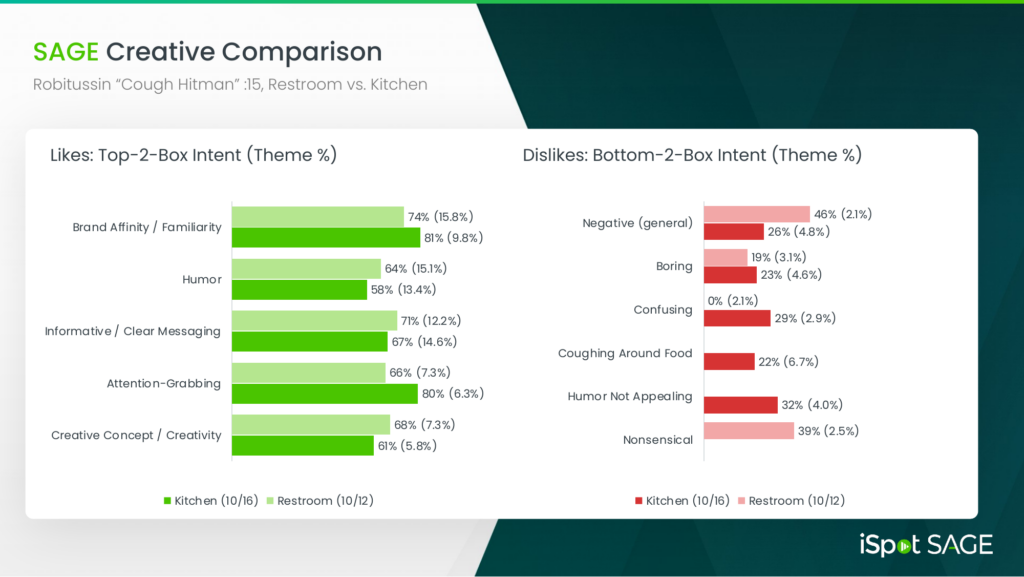
- iSpot’s SAGE Creative AI agent confirmed that the Robby Tussin platform works — the “Restroom” execution proved it can beat OTC norms convincingly. The “Kitchen” cut underperformed due to more dislike among consumers, primarily because the setting introduced a hygiene concern that undermined sentiment, as well as an absence of a distinctive product claim (like honey) leaving Information scores well below norm:
- The honey ingredient added informational and product appeal. “Restroom’s” Informative theme (12.2% of respondents, Top 2 Box theme intent of 71%) reflects the real honey ingredient as a tangible, differentiating product claim. “Kitchen” lacked a comparable product-specific hook — its Information score of 519 tracked -96 points below “Restroom,” and -102 pts below the OTC norm of 621.
- “Kitchen’s” dislike footprint was larger, with five dislike themes totaling about 24% of responses (vs four for “Restroom” totaling about 10%.) The kitchen setting triggered a hygiene backlash. A unique dislike theme — Coughing Around Food — was mentioned by 6.7% of respondents, who reported a Bottom 2 Box intent of 22% (nearly one in four less likely to consider). An additional Humor Not Appealing dislike (4.0%, B2B 32%) was also unique to the “Kitchen” execution. This represents a self-inflicted wound: the kitchen setting introduced a disgust response that the restroom/formal-event setting avoided entirely.
- A Brand Affinity theme was stronger among viewers of “Restroom,” reaching 15.8% of respondents with a professed Top 2 Box intent of 74% vs “Kitchen’s” analogous Brand Familiarity theme (9.8% of respondents, intent of 81%, but the smaller reach limited its overall lift).
- The fix is straightforward: keep the hitman concept, avoid food-adjacent settings, and anchor the creative to a concrete product differentiator.
- Themes are not mutually exclusive as an individual comment can reflect multiple reactions and responses.
- The honey ingredient added informational and product appeal. “Restroom’s” Informative theme (12.2% of respondents, Top 2 Box theme intent of 71%) reflects the real honey ingredient as a tangible, differentiating product claim. “Kitchen” lacked a comparable product-specific hook — its Information score of 519 tracked -96 points below “Restroom,” and -102 pts below the OTC norm of 621.
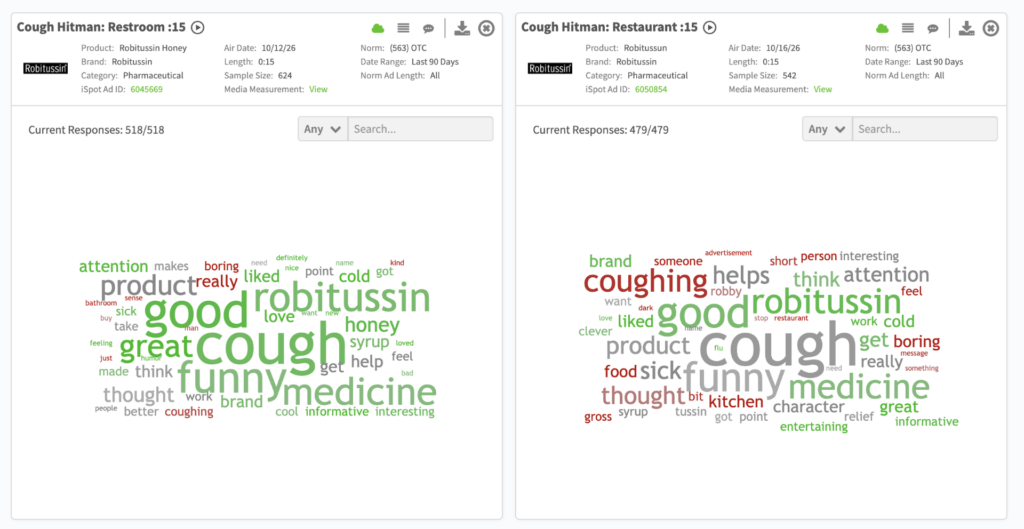
Sample comments on the “Cough Hitman: Restroom” :15
“Robitussin is moving in a new direction and I like it. The ad used to always feature coughing, but that was predictable and boring. The actors reel you in and get your attention. The company is thinking outside the box.”
Female 18-35
“I thought it was funny and creative. It definitely caught my attention and I loved the characters you chose and also I want to go buy the product now.”
Female 36-49
“It got my attention and the premise was scary with the feel that the characters portrayed, but the ending with the cough syrup was funny.”
Male 18-35
“I thought this ad was great, straight to the point on what they offer. It seems like a great product I would definitely try.”
Male 18-35
“Great ad. It catches your attention right away and keeps your attention. The cold and flu season is coming and Robitussin is a brand we trust.”
Female 50+
Yeah, right to the point, I understood it. Just love the style of the commercial.”
Male 36-49
“Robitussin is a good brand for adults and children when feeling under the weather and it begins working within minutes.”
Female 18-35
“I think that humor is a good way to approach basic, simple products. It makes it more relatable to the customer.”
Male 36-49
“Omg…this commercial ad was unexpected and wonderful at the same time. Way to go Robitussin with Honey.”
Female 50+
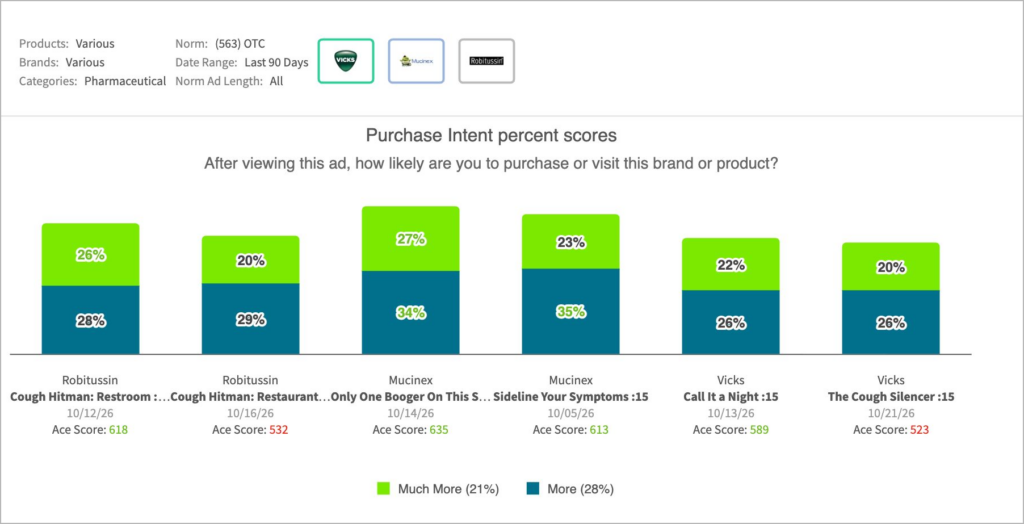
- Robitussin’s toughest competition over the past 90 days came from Mucinex, with two spots featuring ESPN’s (and former NFL player) “Booger” McFarland that were both strong performers and persuaded at a similar to slightly higher rate than “Restroom”:
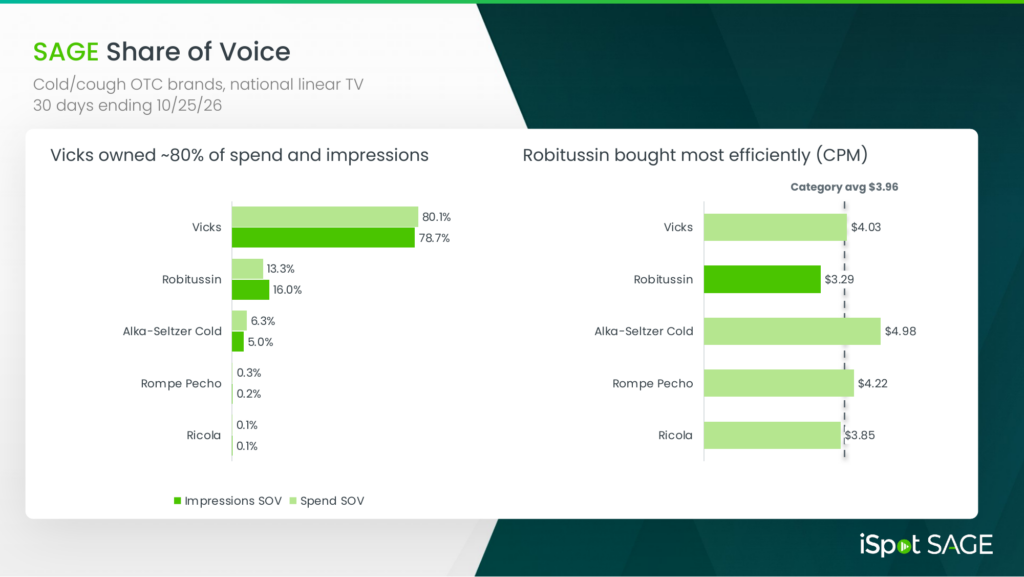
- iSpot’s SAGE Media AI agent reported that over the 30 days ending 10/25/26, Vicks held about 80% of cold/cough linear share of voice but Robitussin earned the highest reach per dollar:
- Vicks paid slightly more than average. Its spend share (80.09%) ran ahead of its impression share (78.70%), and its CPM was $4.03 against a $3.96 average for the competitive set. At its volume, that 1.4-point gap is worth roughly $170K a month.
- Robitussin was the most efficient buyer. It earned 15.96% of impressions for 13.28% of spend, a 2.7-point surplus, at the lowest CPM in the set ($3.29).
- With the brand’s CPM tracking 18% below Vicks, adding budget at that rate should grow share faster than the leader can. Shifting even $500K at $3.29 would add about 150M impressions, roughly +4 SOV points.
- Vicks paid slightly more than average. Its spend share (80.09%) ran ahead of its impression share (78.70%), and its CPM was $4.03 against a $3.96 average for the competitive set. At its volume, that 1.4-point gap is worth roughly $170K a month.
Ineffective creative, even if delivered to the right audience, results in missed opportunity and performance shortfalls. Great creative delivered poorly also results in failed campaigns.
Schedule a demo to find out how your brand can partner with iSpot to quickly solve both challenges simultaneously, delivering high-performing creative while boosting the effectiveness of planning and in-market execution to achieve—and outperform—campaign objectives.
Creative Agency: Publicis LeONE