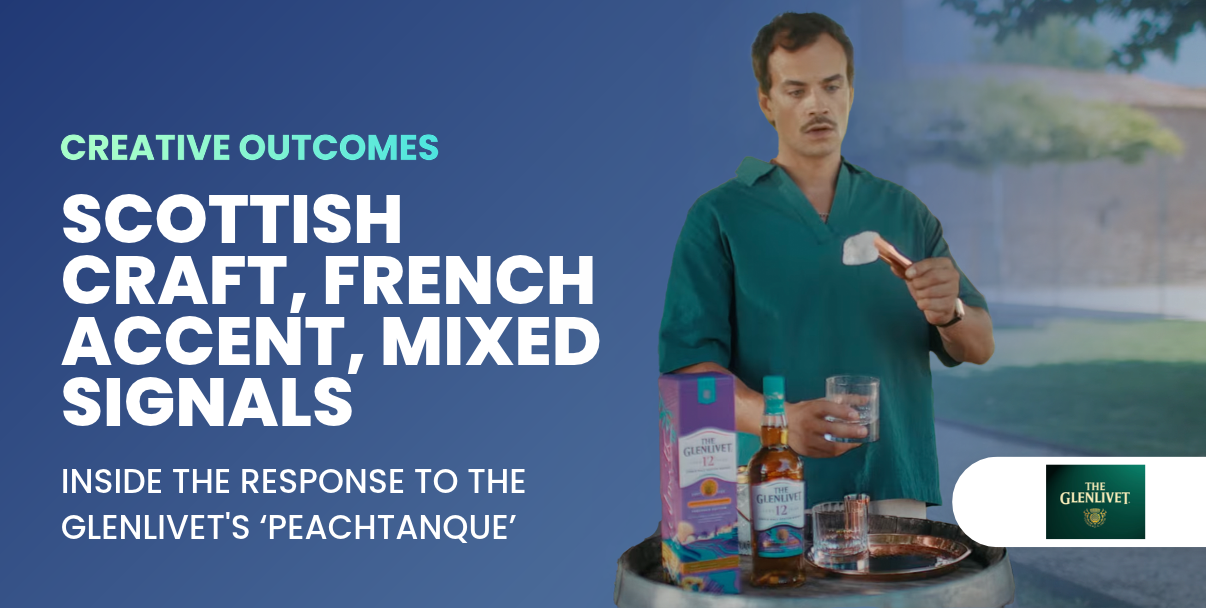
The Glenlivet has traded the Highlands for the Riviera in its latest global campaign. To launch its limited-release 12 Year Old Provence Edition, the iconic single malt teamed up with Run Deep and Rascal Studio director Markus Miarka on “Peachtanque,” a playful twist on pétanque, the game born in La Ciotat in 1907 and still a way of life across Provence. In the spot, players toss white peaches (a nod to the whisky’s tasting notes) and use The Glenlivet bottle as the jack, all set against the sun-soaked backdrop of Southern France.
Insights on “The Glenlivet 12 Year Old Provence Edition” :30 show the creative is connecting, just not necessarily with the audience a Scotch brand might expect.
Here’s what iSpot’s Creative Assessment platform revealed on actual viewer response to the spot.
The Details:
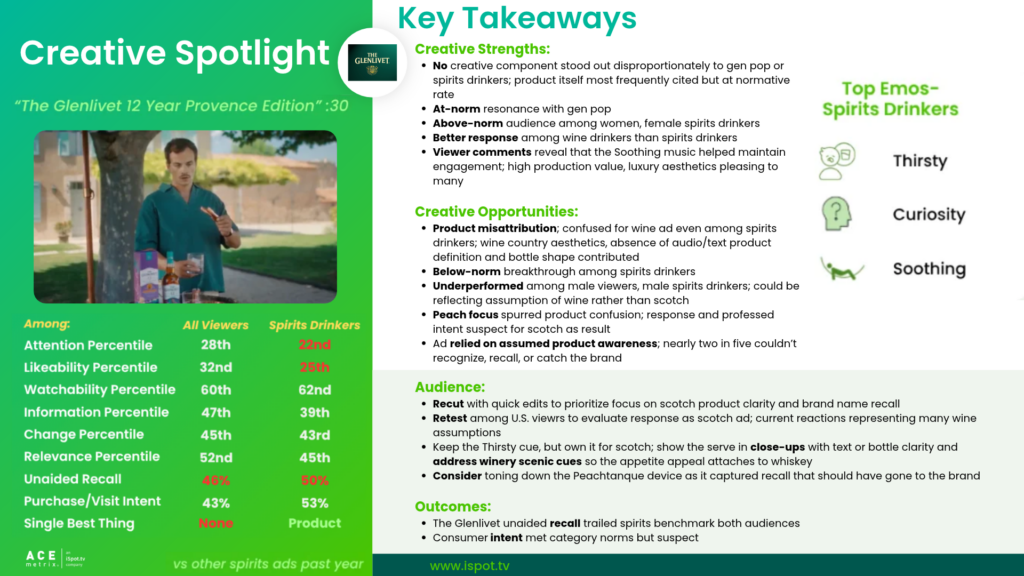
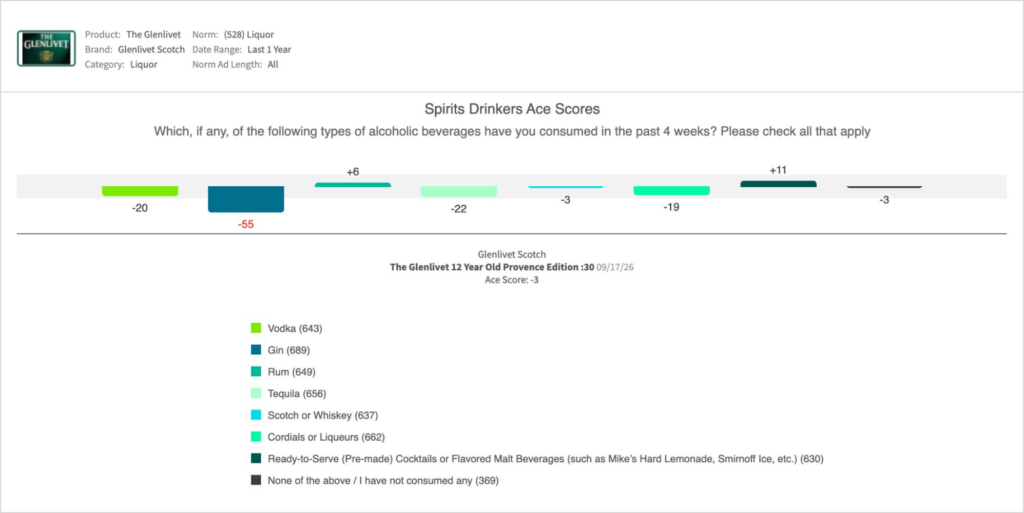
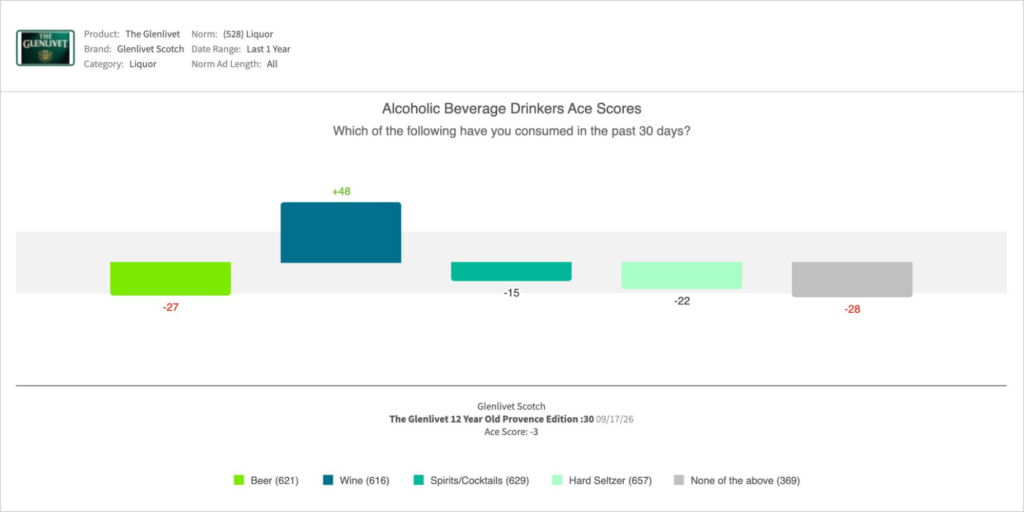
- The new :30 “The Glenlivet 12 Year Old Provence Edition” video posted an overall response (as measured by Ace Score) among U.S. viewers that landed at the liquor one-year norm, but the average hid a sharp audience split:
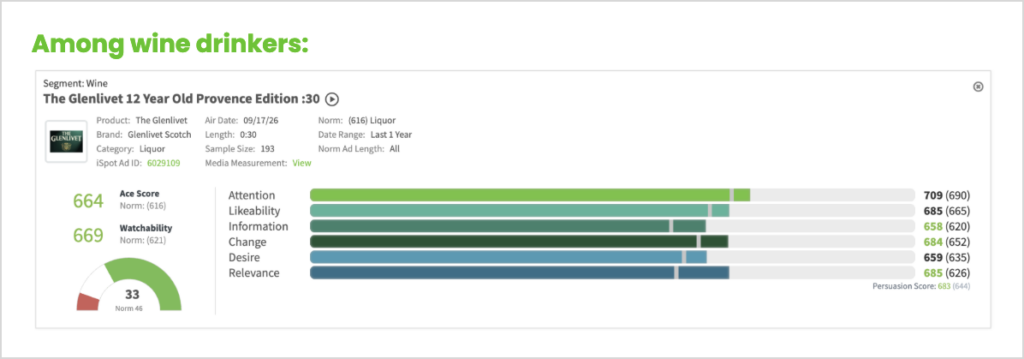
- Beneath the seemingly normative performance, the spot won decisively with women and wine drinkers and lost ground with men. Among spirits drinkers, core Scotch drinkers were neutral. The ad neither won nor lost the franchise base while the Provence, rosé-summer world seemed to speak directly to the wine-drinking audience.
- The ad read as a wine ad, not a scotch ad. “Wine” was the dominant word in viewer verbatims (with “scotch” not mentioned), and 13 of the 69 missed brand-recall responses named wine (“wine,” “peach wine,” “wine company”). Many random misspellings of the brand name in these non-matches also reflected less familiarity with the brand than perhaps assumed — and suggests quick edits: audio, and more frequent branding and audio and/or text specification of the brand as a peach-flavored scotch.
- Unaided brand recall overall was low, with 46% correctly recalling The Glenlivet (-10 pts vs the category average); however, even with phonetic attempts at Glenlivet, 15% didn’t recognize the logo and another 23% could not recall the brand or indicated it went by too quickly to catch (together, nearly 2 in 5 viewers). Product clarification and brand cementing is your key opportunity for the U.S. market and should be addressed before additional spend is placed behind the creative. Showing the bottle prominently in the first 5 seconds with clear “SCOTCH WHISKEY” category signaling could be considered.
- Breakthrough (Attention and Likeability) came in near normative (but close to below-norm levels) and no Single Best Thing stood out at disproportionately high rates vs the average spirits ad. The visuals and product itself were cited at near-norm levels, but so was the ‘none’ choice, signaling viewers not able to identify any impressionable element.
- Although this spot generated good Thirsty response among viewers, a fair number were thirsty for the wrong product. As such, the 43% Top 2 Box intent may be suspect for the scotch itself.
- The creative appealed to women and found its best audience among females 18-35, among whom it ranked in the 79th percentile of liquor ads. Relevance held at norm, which suggests the Provence summer lifestyle fit viewers’ lives even when the brand didn’t register.
- Beneath the seemingly normative performance, the spot won decisively with women and wine drinkers and lost ground with men. Among spirits drinkers, core Scotch drinkers were neutral. The ad neither won nor lost the franchise base while the Provence, rosé-summer world seemed to speak directly to the wine-drinking audience.
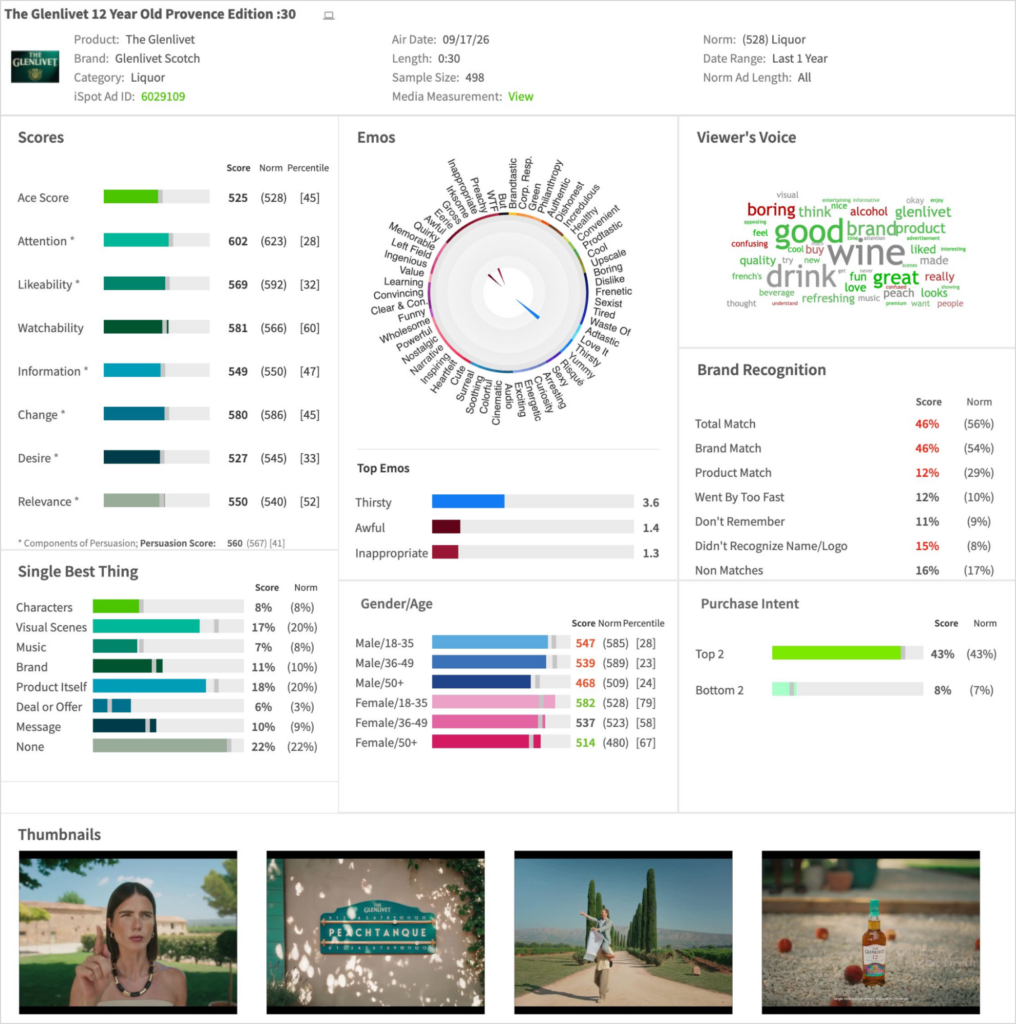
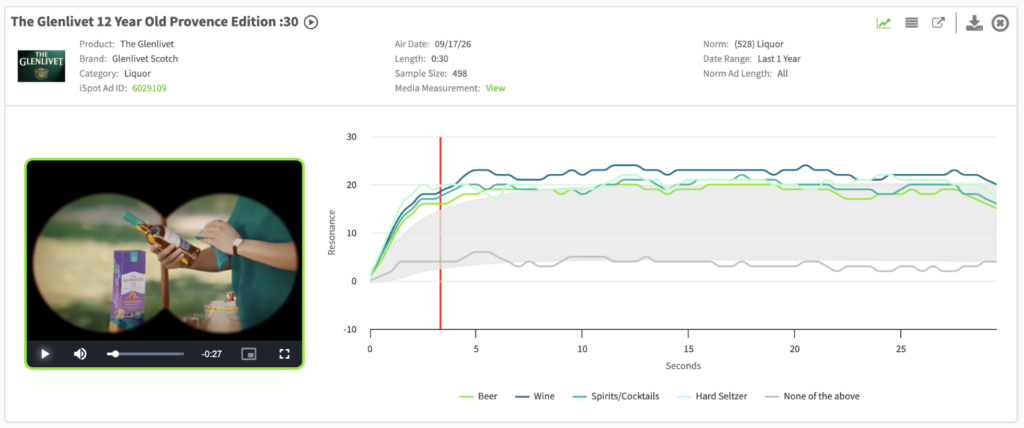
- Second-by-second trace results reflect good engagement among spirits drinkers, but at the first product reveal, wine drinker engagement surged ahead:
- Viewer sentiment on the :30 revealed that product category misidentification was a major theme – not just confusion about “what’s happening” – viewers were fundamentally misunderstanding what product category was being advertised. The Provence setting, peach imagery, outdoor lifestyle, and lack of clear scotch cues led many viewers to assume it was wine. As such, the brand might evaluate such wine-suggesting cues: the vineyard/orchard imagery is creating wrong associations.
- A significant portion of the positive sentiment is misleading because it came from a sizable section of people who thought a different product entirely was being advertised. Beyond wine confusion, many viewers simply didn’t know what was being advertised. However, those with prior knowledge of Glenlivet understood and enjoyed the ad.
- The premium visual appeal and sophisticated, luxury positioning also resonated well and the ad successfully conveyed fun, social drinking occasions. The music saw positive commentary and helped maintain engagement.
- Viewer sentiment on the :30 revealed that product category misidentification was a major theme – not just confusion about “what’s happening” – viewers were fundamentally misunderstanding what product category was being advertised. The Provence setting, peach imagery, outdoor lifestyle, and lack of clear scotch cues led many viewers to assume it was wine. As such, the brand might evaluate such wine-suggesting cues: the vineyard/orchard imagery is creating wrong associations.
Sample comments on the “The Glenlivet 12 Year Old Provence Edition” :30
“I would love to try this brand of wine. I have never heard of it before.”
Female 36-49
“It made it feel compelling and gentle. Totally luxurious for the brand.”
Male 36-49
“I liked the ad because it highlights the premium look and classic heritage of the product. The cinematography makes it feel like a very high-quality and sophisticated brand.”
Female 21-35
“It’s about wine I have learned since seeing the vineyard.”
Female 21-35
“It was entertaining and showcased the wine well.”
Male 36-49
“That their wine is fresh from the groves and brings people together.”
Female 36-49
“The commercial is probably showing what a time with the wine should be like or is like, when with friends.”
Male 36-49
“Funny and clever ad for Glenlivet, the Province edition. Showing a very French view of the Scot’s whiskey.”
Female 36-49
“Very boring. Doesn’t even say what the name of the product is.”
Female 36-49
“I loved the video’s visual appeal for this ad for Glenlivet! The luxury of Glenlivet came shining through!”
Female 50+
“The visuals are A1 quality made professional, but I definitely was lost on what was going on.”
Male 21-35
“I think the ad is telling the viewer that Glenlivet is fresh and fun. It’s a good cocktail for a day out that’s fresh and possibly a bit quirky.”
Female 50+
“I guess they were wanting me to know they put peaches in their wine.”
Female 50+
“What I think about the ad is that it was about a wine developer and maker who have the brand Glenlivet and the drink looks good.”
Male 21-35
“Now I’m thirsty for wine! I think I’m going to get me a glass now!”
Male 36-49
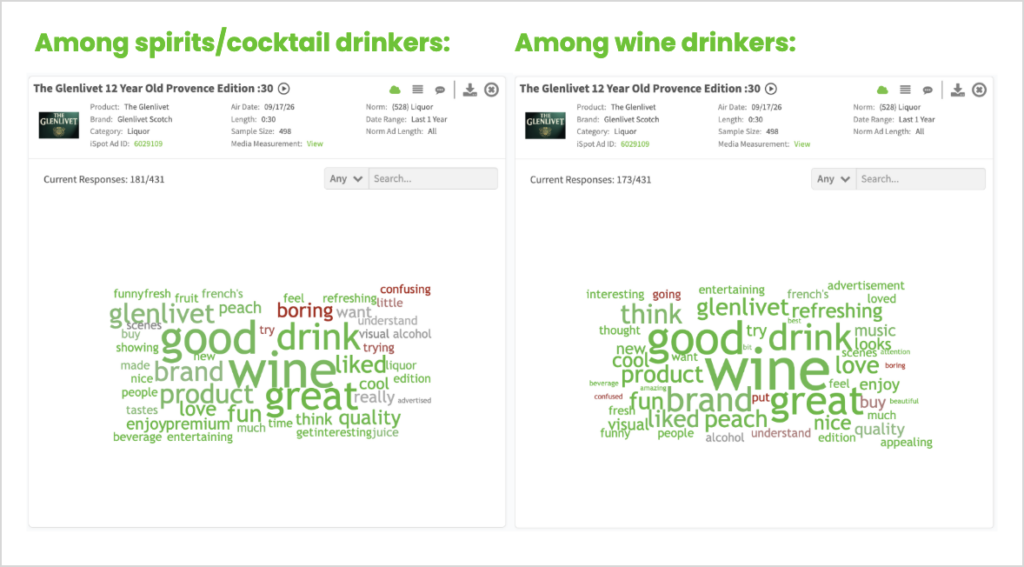
- Summary word clouds indicate that comments even among spirits drinkers reflected a similar misinterpretation of the product as was seen among wine drinkers, likely leading to the average response seen among the target liquor intender audience — it wasn’t just a portion of the audience that was confused; it included Glenlivet’s core target:
- Relevance/relatability was significantly higher among wine drinkers than spirits drinkers, as were all creative components.
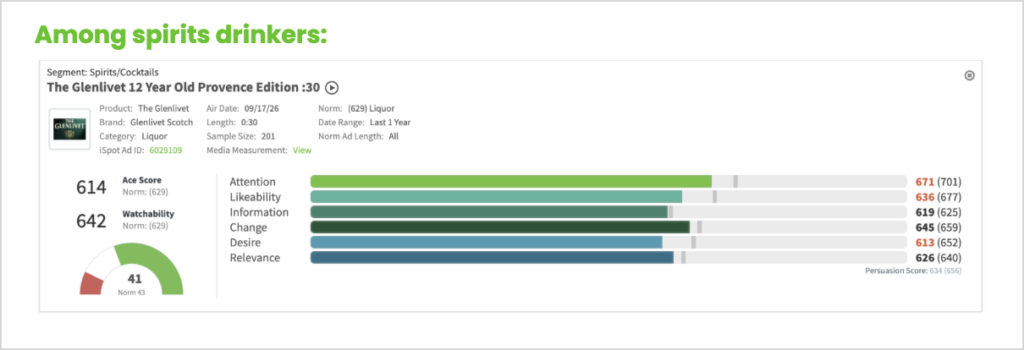
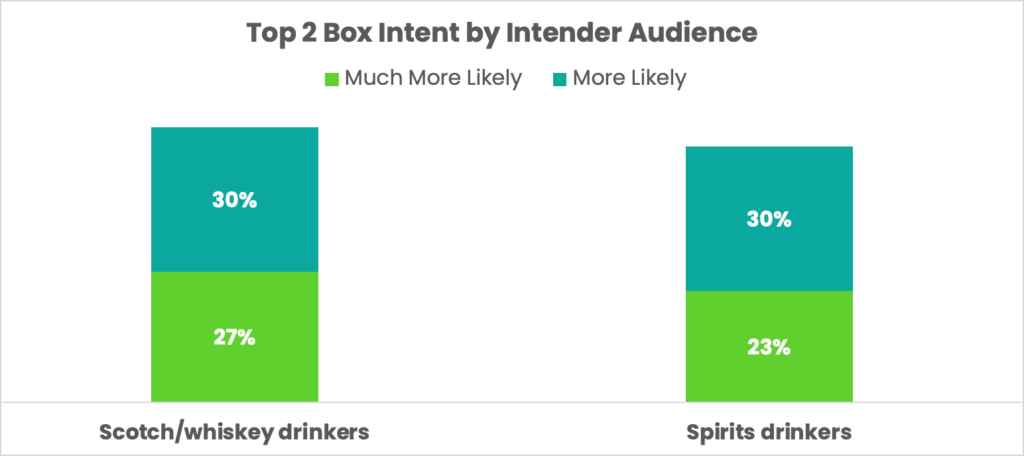
- Top 2 Box intent among scotch/whiskey drinkers specifically was slightly stronger (57%) than among spirits drinkers overall (53%), indicating that category-specific knowledge (and seemingly higher existing brand recognition) resulted in only slightly stronger persuasion:
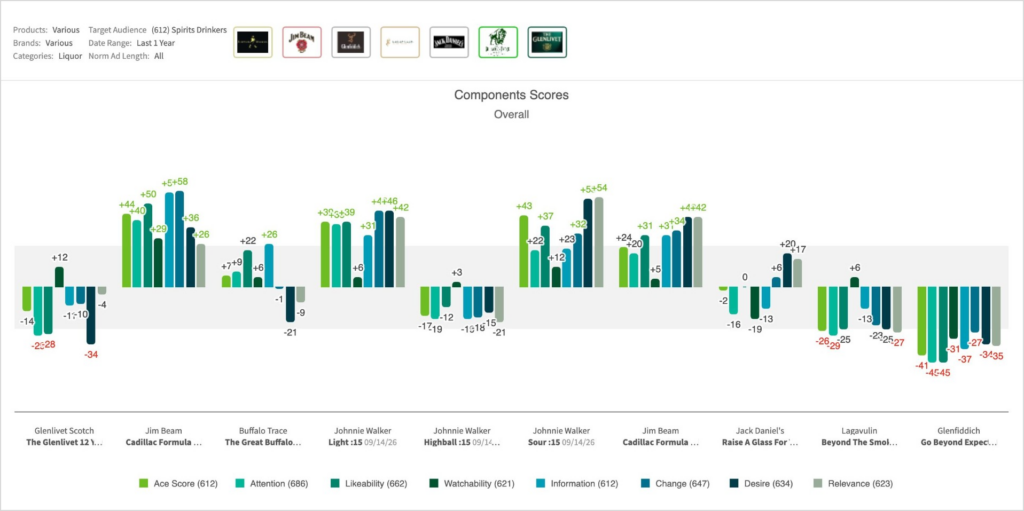
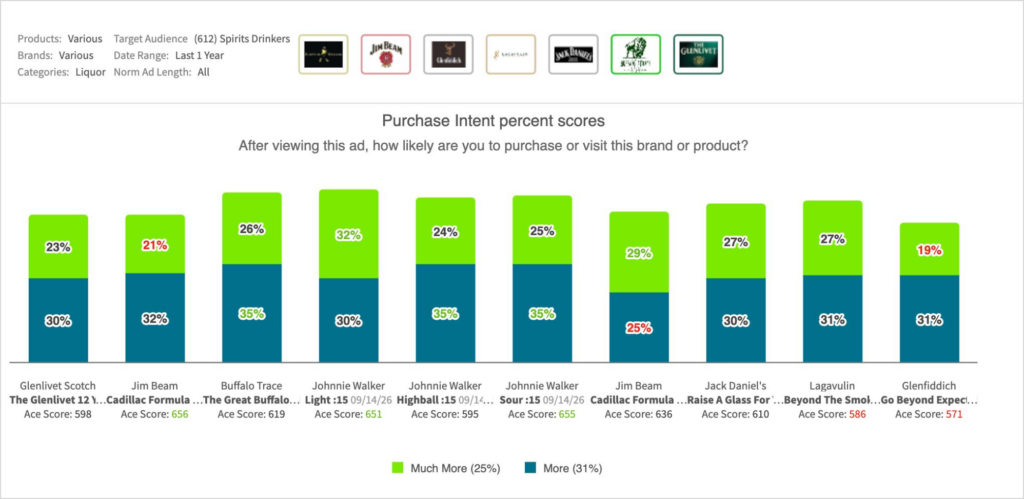
- Among scotch/whiskey ads breaking over the past 90 days, spirit drinkers responded more positively to several Johnnie Walker and Jim Beam spots:
- However, not all sparked above-norm intent; the most persuasive were a Johnnie Walker “Light” :15 (62% Top 2 Box among spirits drinkers) and a :30 “The Great Buffalo” from Buffalo Trace (61%) vs Glenlivet’s 53% conversion.
Ineffective creative, even if delivered to the right audience, results in missed opportunity and performance shortfalls. Great creative delivered poorly also results in failed campaigns.
Schedule a demo to find out how your brand can partner with iSpot to quickly solve both challenges simultaneously, delivering high-performing creative while boosting the effectiveness of planning and in-market execution to achieve—and outperform—campaign objectives.
Creative Agency: CPB London