As streaming continues to reshape the TV landscape, marketers are increasingly looking beyond impressions and reach to understand what actually drives business results. That shift has made trusted measurement, transparent data, and outcome-based optimization more important than ever.
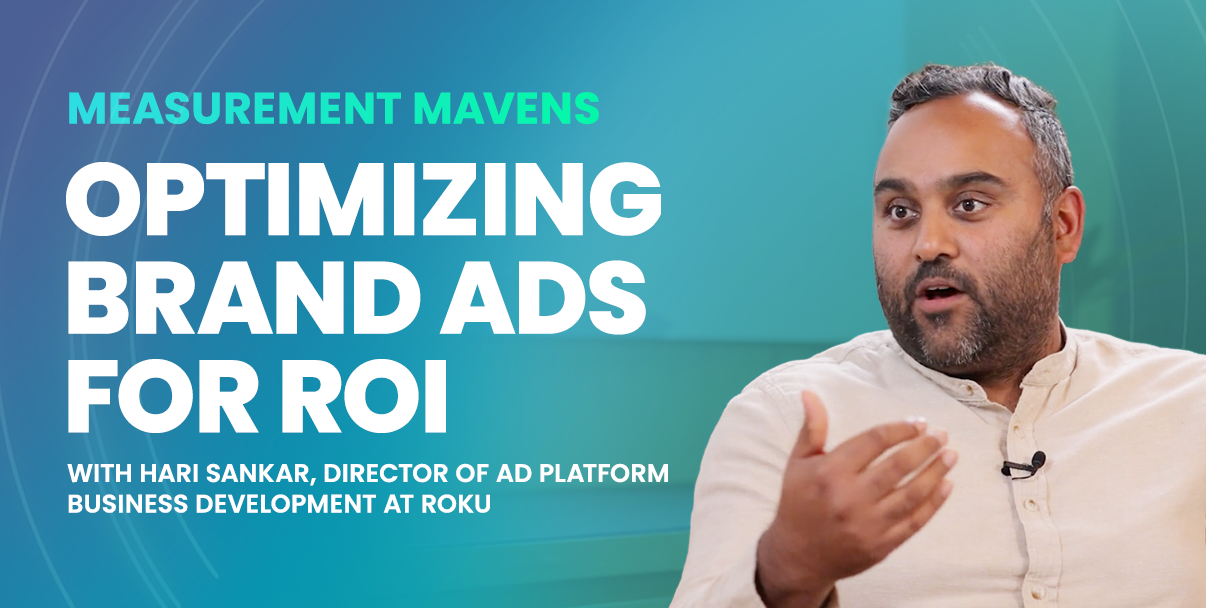
We recently sat down with Hari Sankar, Director of Ad Platform Business Development at Roku, to discuss how Roku is approaching measurement in today’s fragmented media environment, why brands’ own KPIs should guide optimization strategies, and how partnerships with third-party measurement providers like iSpot are helping advertisers optimize directly toward their source of truth.
Watch the full interview:
This conversation has been lightly condensed and edited for clarity.
What are the KPIs that are most important to you and your organization around optimization and why?
Hari Sankar: The KPIs that Roku is the most excited about are the brand’s KPIs. As a publisher, we want to make sure we’re delivering results for brands–whether that’s top of funnel, middle funnel or bottom of funnel. We want to make sure that their brands are getting what they want from a KPI, from who they measure it by, as well. We don’t have a horse in that race anymore. We want to make sure that we look good in whatever their source of truth is.
How do you approach the brand challenge around fragmentation?
Hari Sankar: We sit in an interesting position being both a publisher, but also an operating system. We’re on the glass and own the glass. So we realize that CTV measurement is in a nascent stage and growing, and we’re kind of getting to maturity with great partners.
The ingredients have been difficult for partners to get, and because we have those ingredients, we want to make sure that we are providing them to measurement partners like iSpot so that the consumer journey can be tracked across all those fragmented pieces. This provides brands with a more accurate version of what is happening with consumer journeys and their brand engagement.
How do you think about outcomes in general for marketers?
Hari Sankar: Marketers get to choose the outcomes they want to drive, which is really fun, and we want to be in the place where we drive that for those advertisers. The hard part is that they don’t always own the outcome source themselves–that might have to be a partner with the third party to understand that.
We want to make sure we’re buying those assets ourselves so that we can provide them as optimized results to a brand. Or instead, what we’ve done in a more interesting manner with iSpot, is think: how do we make sure that we get those outcomes that the brand measures through iSpot directly to us as Roku, as a publisher, so that we’re optimizing to the true outcome. This is more beneficial than us having to tell them we’ve created some outcome for you, so that we’re telling a narrative as opposed to just doing it in their source of truth. We’d simply say if we launched an optimization feed together where the advertiser can pipe their outcomes directly into the Roku platform so that Roku media can optimize directly towards the outcome they want to get.
What’s been the most interesting result from your collaboration with iSpot?
Hari Sankar: As we’ve been going through this journey with the optimization feed, it’s been incredible to see the lift that we can get instead of having to guess what the advertiser wants for a conversion; to be able to get that directly and provide more of it. The measurement moment was how easy it is for that collaboration to happen.
We’ve tried to build a lot of tools over the years to get that signal from the advertiser. It’s very laborious for advertisers to do a publisher by publisher by publisher integration to get that information over to them in a trusted and privacy safe manner, so that advertisers don’t lose control of their data. Being able to do that with iSpot meant that we could just turn that tap on, and suddenly, we were able to optimize towards the source of truth.